

Last updated: October 1, 2026
For most people comparing laser Fraxel vs CO2, the key difference is how much skin each treatment removes – and how much recovery that may require. Commonly compared nonablative Fraxel treatments leave the skin surface intact, while fractional CO2 laser resurfacing creates tiny areas of surface removal. At Vip MediSpa, a consultation about Fraxel laser treatment can help clarify which laser resurfacing options we offer and which may fit your skin and goals.
What Is the Difference Between Fraxel and Fractional CO2?
Nonablative Fraxel treatment heats small areas beneath the skin surface without intentionally removing its outer layer; fractional CO2 removes microscopic columns of surface tissue. Both approaches leave untreated skin between treatment zones, but fractional CO2 generally involves more visible healing. The right comparison depends on the actual device and settings being considered.
A 2025 expert consensus on fractional ablative CO2 treatment, developed with input from 21 dermatologists and plastic surgeons, describes its established role in facial rejuvenation and addresses safety, technique, and aftercare. Its discussion of limited downtime should not be taken as a recovery promise: treatment intensity and individual healing matter.
Does Fraxel Always Mean a Nonablative Laser?
No. Fraxel is a brand associated with different fractional laser devices, not a generic name for all nonablative resurfacing. Ask which device is proposed, whether it is ablative, and what its expected recovery looks like for your treatment area.
Which Skin Concerns Might Each Laser Address?
Nonablative fractional treatment may suit adults seeking gradual improvement in uneven texture, fine lines, and some discoloration. Fractional CO2 may be considered when more pronounced surface changes call for a stronger resurfacing approach. Neither choice guarantees scar removal, wrinkle clearance, or even skin tone; the concern’s cause and depth shape the plan.
The main differences are easier to see side by side:
| Concern or goal | Nonablative fractional treatment | Fractional CO2 |
|---|---|---|
| Subtle roughness and fine lines | May offer gradual improvement with less visible recovery | May be more treatment than the goal requires |
| Pronounced texture and wrinkles | May provide a more modest change | May offer stronger resurfacing, with more healing |
| Sun-related discoloration | May help selected pigment concerns | Requires careful assessment of pigment risks |
Which Option May Help Acne Scars and Deep Wrinkles?
For laser resurfacing acne scars, scar shape and depth matter as much as the laser name. Shallow texture changes may respond differently from deep, narrow, or tethered facial scars, which may need another approach alongside or instead of resurfacing. Fractional CO2 may be considered for deeper wrinkles, but expectations should reflect your skin and willingness to allow for recovery. Brown spots also deserve an accurate diagnosis before treatment; our guide to distinguishing sun spots from concerning skin changes explains why.
Who Is a Good Candidate for Each Approach?
A good candidate has a clearly identified skin concern, healthy skin at the proposed treatment site, and realistic expectations for improvement and recovery. A clinician should also consider skin tone, prior pigment changes, scarring history, sun exposure, and current skin care. Those details are more useful than choosing a laser by its brand name alone.
In clinical practice, the most helpful starting point is often the feature you want to change: facial acne scars, rough skin, fine lines, or sun damage. Your ability to follow aftercare and protect healing skin from the sun also affects whether a resurfacing plan is practical. Patients traveling from Milwaukie to Vip MediSpa in Portland can use a consultation to discuss both the desired result and the recovery they can accommodate.
How Do Skin Tone and Melasma Affect the Choice?
Skin that tends to develop dark marks after irritation needs particular care because laser heat can cause unwanted pigment changes. Melasma also requires a distinct assessment: a heat-based laser is not automatically the best melasma treatment, and improvement may be difficult to maintain. Tell your clinician about previous darkening after procedures, any melasma diagnosis, and products you use before deciding on treatment. For a broader view of available approaches, see our guide to choosing among laser facial treatments.
What Happens During a Fractional Laser Resurfacing Session?
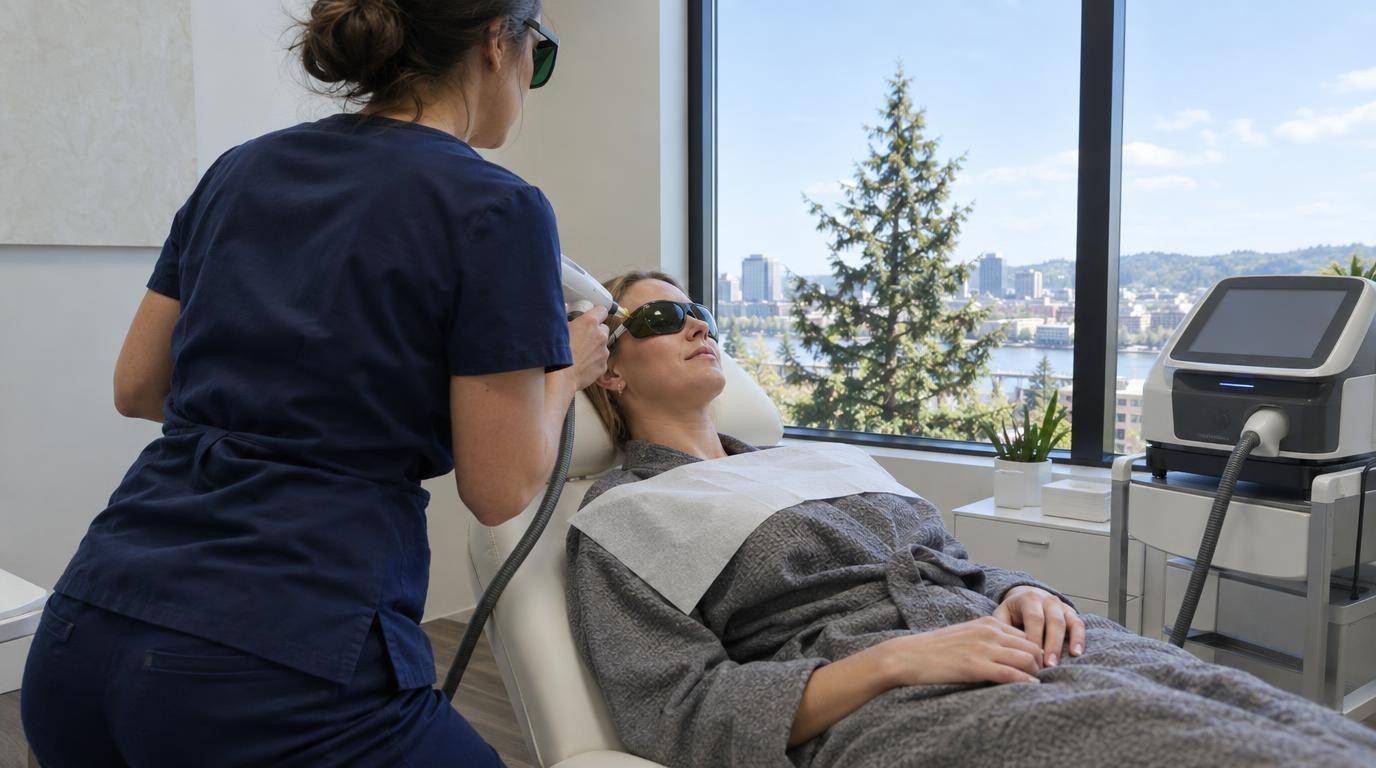
A fractional laser resurfacing session begins with a review of your skin, goals, health history, and treatment plan. After the skin is prepared and protective eyewear is in place, the clinician passes the laser over the selected area using settings suited to your skin and concern. Comfort measures and aftercare depend on the approach chosen.
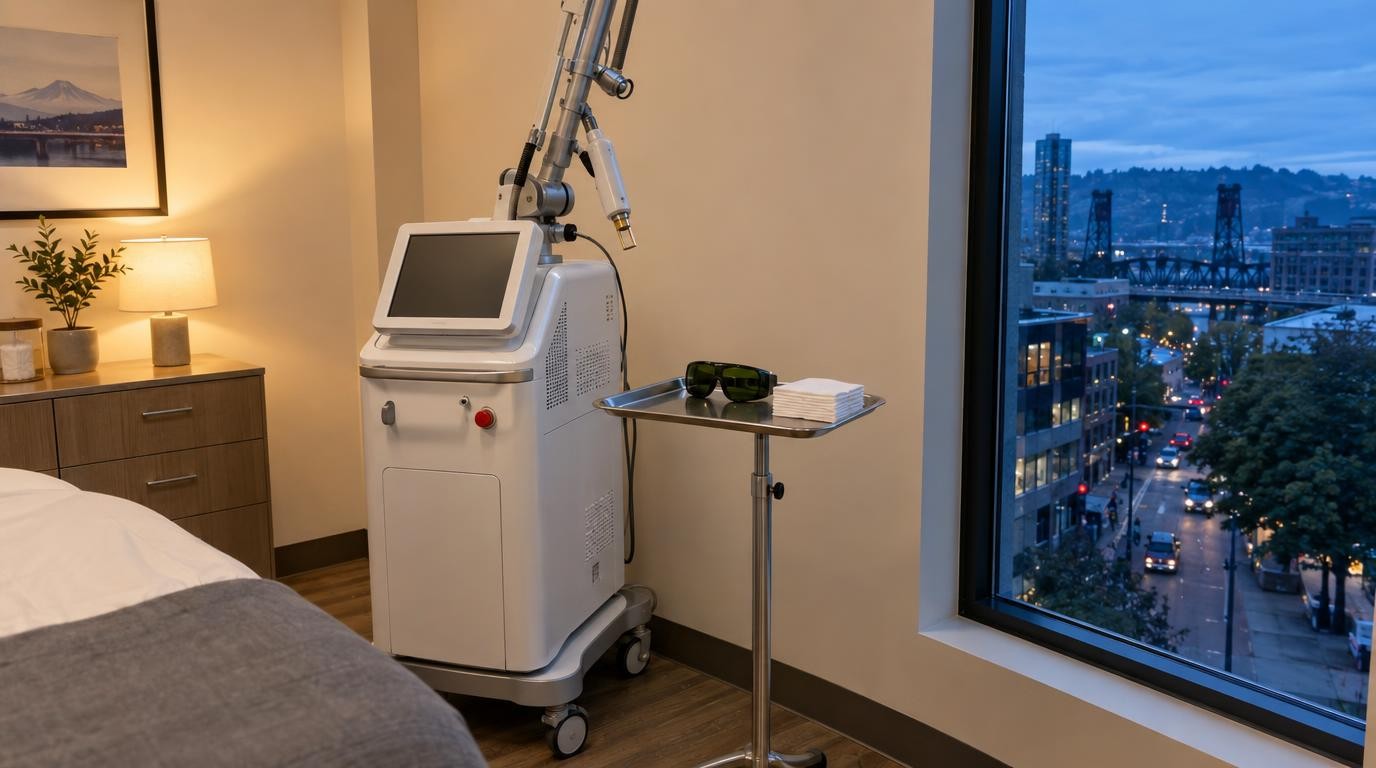
Preparation may include instructions about sun exposure, skin care products, and medications. Depending on the procedure, the clinician may use topical numbing or another comfort measure; you should know what sensations to expect before treatment starts. The clinician then treats the planned area while avoiding skin that should not be lasered.
How Are Skin Preparation and Comfort Typically Managed?
Tell your clinician about sensitive skin, cold sores, recent tanning, and any change in the treatment area. After treatment, you should receive instructions for cleansing, moisturizing, sun protection, and when to resume your usual products. More intensive resurfacing may require more involved wound care. The specific device, treatment intensity, and aftercare plan should be confirmed during your consultation rather than assumed from the term “Fraxel.”
Risks, Side Effects and Who Is Not a Candidate
Fractional resurfacing can cause redness, swelling, warmth, tenderness, and peeling; stronger ablative treatment also leaves a healing skin surface. Less common but important risks include infection, persistent redness, unwanted lightening or darkening, and scarring. Your clinician should explain how your skin history affects those risks before either approach.
Recovery is a meaningful part of the choice. For carbon dioxide laser resurfacing, Cleveland Clinic says treated areas generally heal in 10 to 21 days, depending on the condition and treatment intensity. That range is not a prediction for every fractional CO2 session, and nonablative Fraxel treatment generally involves less surface healing. Follow your own clinician’s instructions rather than planning around a general timeline.

Active infection in the treatment area calls for postponing resurfacing. In the fractional CO2 expert consensus, participating clinicians also identified burns, recent sun exposure, and pregnancy or breastfeeding as reasons not to proceed with treatment at that time. Discuss a history of cold sores, pigment changes, unusual scarring, relevant medications, and any suspicious skin spot with your own clinician. A careful assessment helps determine whether treatment should proceed, be adjusted, or be deferred.
How Can You Choose Between Fraxel and CO2?
Choose between Fraxel and fractional CO2 by matching a confirmed skin concern to the treatment’s likely benefit, pigment risks, and recovery requirements – not by assuming one laser is universally better. Nonablative treatment may fit a gradual goal; fractional CO2 may fit a more intensive resurfacing plan when appropriate. If you are considering laser skin resurfacing in the Portland area, contact Vip MediSpa for a consultation to review your skin, your goals, and the options available to you.
Frequently Asked Questions
What should I ask before booking a Fraxel treatment?
Ask which Fraxel device your clinician plans to use, whether it removes surface skin, and what recovery to expect for the area being treated. Fraxel refers to several fractional laser devices, so the brand alone does not identify the treatment. Also discuss your skin tone, goals, and ability to follow aftercare.
How long does skin take to heal after fractional CO2 treatment?
Treatment intensity and individual healing affect recovery. Cleveland Clinic reports that areas treated with CO2 laser resurfacing generally heal in 10 to 21 days, depending on the condition and treatment intensity; that range is not a prediction for your fractional CO2 session, so ask your clinician for a personalized estimate.
What results can I expect from Fraxel versus fractional CO2?
Nonablative Fraxel may gradually improve mild roughness, fine lines, and selected discoloration, while fractional CO2 may offer stronger resurfacing for more pronounced texture or wrinkles. Neither treatment guarantees scar removal, wrinkle clearance, or even skin tone. Your likely result depends on the concern’s cause and depth, the device, and its settings.
Can laser resurfacing treat every type of acne scar?
No. An acne scar’s shape and depth help determine whether laser resurfacing is appropriate. Shallow texture changes may respond differently from deep, narrow, or tethered scars, which might need another approach alongside or instead of laser treatment. Have a clinician assess your scars before choosing between nonablative Fraxel and fractional CO2.
Should I mention past dark marks or melasma before laser treatment?
Yes. Tell your clinician if your skin has developed dark marks after irritation or if you have melasma. Laser heat can cause unwanted pigment changes in susceptible skin, and melasma needs its own assessment. Your clinician can weigh your skin tone, pigment history, and goals before recommending a treatment and settings.
How should I prepare for a laser resurfacing appointment?
Before your appointment, discuss recent tanning, cold sores, sensitive skin, medications, and products you use. Your clinician may give instructions about sun exposure and skin care, then prepare the area and provide protective eyewear during treatment. Ask which comfort measures will be used and what cleansing, moisturizing, and sun protection will involve afterward.
This article is general information and is not medical advice. Talk to a licensed clinician about your own situation before making a treatment decision.






