Last updated: November 19, 2026
SmoothShapes is a non-invasive cellulite treatment intended to temporarily improve the appearance of dimpling, not remove cellulite permanently.
What is non-invasive cellulite treatment with SmoothShapes?
SmoothShapes is a branded light-and-massage treatment designed to temporarily reduce the appearance of cellulite without an incision. Cellulite creates dimples and uneven texture that are different from thigh fat or loose skin. We offer SmoothShapes and customized cellulite treatment in Portland, Oregon.
The FDA 510(k) record for the SmoothShapes XV system lists temporary reduction in the appearance of cellulite as an indication. FDA 510(k) clearance reflects substantial equivalence to a legally marketed device; it is not FDA approval or a finding that cellulite can be permanently removed.
Can SmoothShapes treat cellulite on the thighs and buttocks?
Cellulite commonly occurs on the thighs and buttocks, where SmoothShapes is intended to temporarily reduce visible dimpling. Cellulite can also appear on the hips, abdomen, and breasts.
How does SmoothShapes work on cellulite dimpling?
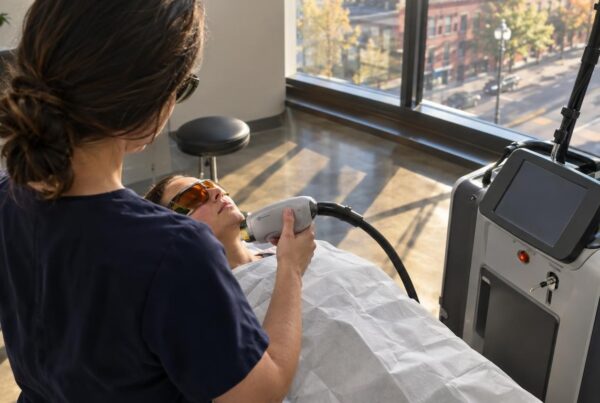
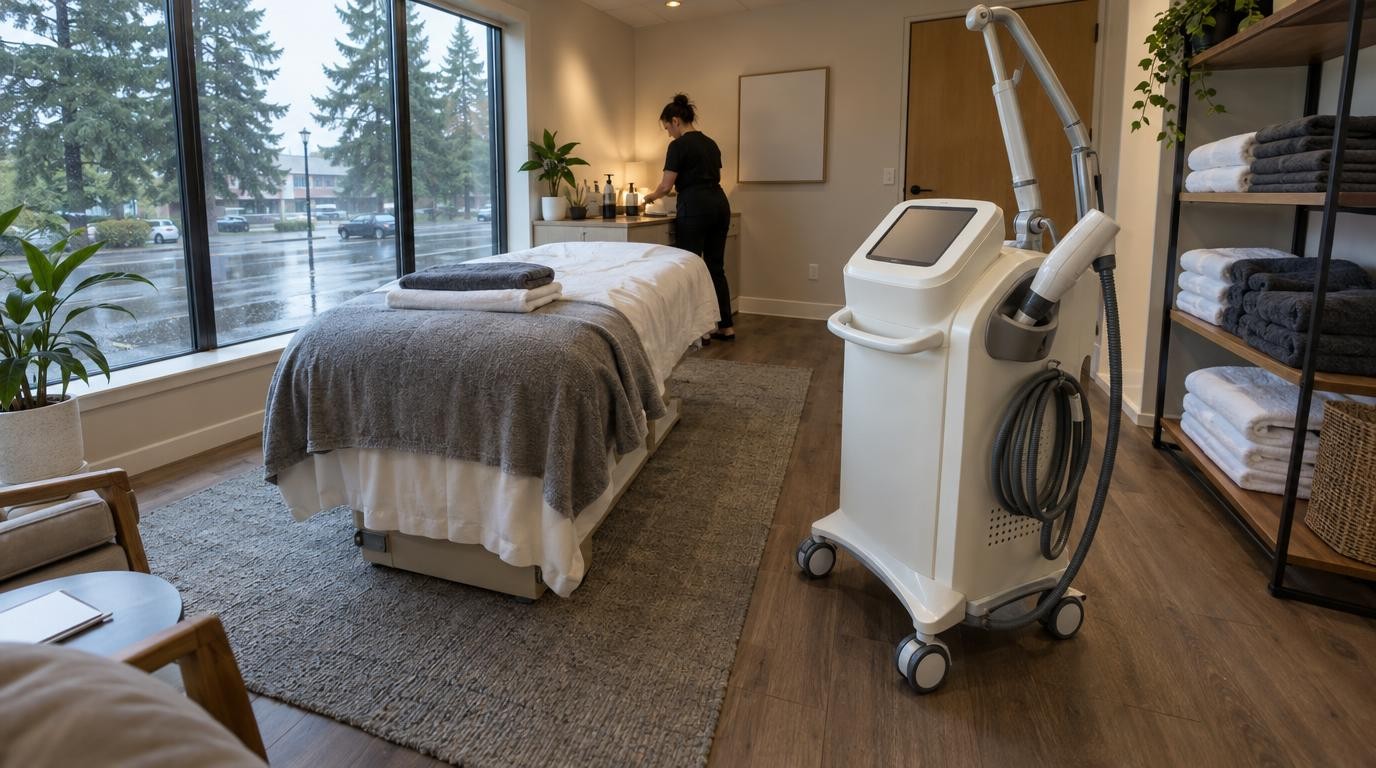
The SmoothShapes applicator combines heating from LED and laser light with contoured rollers and vacuum suction at the skin surface. Its cleared indication concerns the appearance of cellulite, not fat removal.
SmoothShapes also has a cleared indication for temporary improvement of local blood circulation. The American Society for Dermatologic Surgery explains that fibrous bands called septae pull the skin downward, creating cellulite’s quilted appearance.
Does SmoothShapes release the bands that pull skin inward?
No. The SmoothShapes applicator does not cut septae beneath the skin. Minimally invasive subcision, by contrast, uses a blade or needle beneath the skin to release bands responsible for selected dimples.
Who may be a good candidate for SmoothShapes?
An adult bothered by visible cellulite dimpling may be a candidate for SmoothShapes if temporary cosmetic improvement would meet their goals. Suitability depends on what creates the uneven appearance and whether light, suction, and massage suit the person’s skin and health history.
The American Board of Cosmetic Surgery estimates that 85 to 90% of adult women have cellulite. Fat reduction and cellulite reduction are different treatment goals.
How can I reduce cellulite in my legs?
Non-invasive treatment such as SmoothShapes may temporarily make leg dimples less noticeable. Exercise that builds muscle can make skin look firmer, but it does not directly release the bands that create dimples. The American Academy of Dermatology notes that weight loss can make cellulite less visible for some people, while loose skin afterward can make it more noticeable. Cellulite occurs at any weight, so weight loss is not a cure; removing fat with a procedure often has no effect on cellulite. Our guide to non-invasive body contouring explains why fat reduction and cellulite reduction call for different goals.
An American Society of Plastic Surgeons article describes retinol- or caffeine-containing creams as at-home options that may temporarily make cellulite less noticeable. Effects of such less-intensive approaches may last only hours, days, or weeks; creams do not permanently release the bands that create dimples.
Will SmoothShapes help loose skin on my thighs?
Do not count on SmoothShapes to tighten loose thigh skin. Its documented indication concerns a temporary change in the appearance of cellulite, not skin laxity. Loose skin can coexist with cellulite, but an improvement in dimpling does not establish that laxity will improve.
What happens during a SmoothShapes treatment visit?
- Identify the concern. The planned treatment targets visible cellulite dimpling rather than fat removal or loose-skin tightening.
- Complete screening. The treating team reviews relevant medicines, skin conditions, and other factors before light-based treatment.
- Receive applicator treatment. The device combines light, rollers, and suction without cutting the skin.
- Review aftercare. Instructions address any skin response and the proposed follow-up plan.
For non-invasive cellulite devices, the number of treatments varies with the device, energy source, treatment area, and individual needs. Repeat sessions are generally needed to maintain improvement; there is no single session count or treatment interval that applies to every device.
How much downtime should I plan for after treatment?
SmoothShapes does not involve incision-related recovery, but temporary redness, tenderness, or bruising may affect comfort or activities. There is no guaranteed return-to-activity time.
What results can SmoothShapes achieve, and how long might they last?
The extent and duration of improvement with SmoothShapes vary. For most non-invasive cellulite devices, improvement typically lasts months and repeat sessions are needed to maintain it; that general range is not a SmoothShapes-specific promise. Photographs taken under similar conditions can help track a visible change without implying that skin will become completely smooth.
Our before-and-after gallery may help illustrate cosmetic results, but photographs cannot predict your own SmoothShapes result.
Can SmoothShapes remove cellulite permanently?
No. SmoothShapes is indicated for temporary reduction in the appearance of cellulite, not permanent removal. Full resolution is rare with non-invasive cellulite devices, and maintaining improvement generally requires repeat treatment.
What are the risks of SmoothShapes, and who should avoid it?
SmoothShapes can cause temporary skin reactions such as redness, tenderness, or bruising from light, suction, and massage. We cannot quote reliable SmoothShapes-specific rates for these reactions. A device-specific assessment is necessary because suitability depends on the equipment used, the treatment area, skin condition, and health history. Non-incisional treatment avoids some procedural risks of subcision, but non-invasive does not mean risk-free.
Wait until an active infection or broken skin in the treatment area has healed, and postpone elective cosmetic treatment during pregnancy. Tell your clinician about medicines that may increase light sensitivity and other skin concerns so they can check the specific model’s precautions; these concerns do not all automatically rule out treatment. Seek prompt medical attention if you develop blistering, severe or worsening pain, rapidly spreading redness, or fever after treatment.
What should I tell the clinician before light-based treatment?
Bring an up-to-date medicine list and describe recent skin treatments, unusual reactions to light, and any active skin concern where the applicator would be used. Also explain whether your priority is a particular dimple, widespread uneven texture, loose skin, or fat reduction. Those details help the treating clinician determine whether to proceed and which precautions apply.
How does SmoothShapes compare with treatments that target cellulite bands?
SmoothShapes uses light and massage for temporary appearance improvement; acoustic wave therapy uses sound-based energy. Mechanical subcision uses a blade or needle beneath the skin to release bands responsible for selected dimples.
These approaches differ in technique and what a patient can expect:
| Treatment | How it works | Practical consideration |
|---|---|---|
| SmoothShapes | Light, rollers, and suction at the skin surface | No incision; temporary improvement in appearance |
| Acoustic wave therapy | Sound-based energy applied without an incision | Several sessions may be needed to see a reduction |
| Radiofrequency combination treatment | Radiofrequency heats tissue; some devices also use laser light, suction, and massage | No incision; ask which combination device would be used |
| Mechanical subcision | A blade or needle releases bands beneath the skin | Minimally invasive; recovery and risks differ from surface treatments |
The American Academy of Dermatology reports that some patients using a radiofrequency combination device see a small, short-lived reduction after several treatments; bruising is common with that treatment. In a separate small study of vacuum-assisted band release, many patients had less cellulite for up to 3 years; that finding does not predict a SmoothShapes result. Liposuction is not recommended for treating cellulite and can make dimpling more obvious.
What surgery removes cellulite from the thighs?
There is no single definitive surgery that removes all thigh cellulite. Mechanical subcision, including the band-release approach used by Cellfina, targets selected tethered dimples rather than every kind of uneven texture. The American Society of Plastic Surgeons describes Cellfina as most useful for deep dimples on the buttocks and backs of the thighs, and less useful for generalized waviness.
Another minimally invasive option, laser-assisted band release such as Cellulaze, places a laser fiber beneath the skin to disrupt bands that cause dimples. The American Academy of Dermatology reports improvement lasting a year or longer for some patients, although more research is needed. Neither procedure reliably removes all thigh cellulite, and an under-the-skin laser procedure is not a non-invasive SmoothShapes treatment.
Is acoustic wave therapy the same as SmoothShapes?
No. SmoothShapes combines light with rollers and suction, whereas acoustic wave therapy uses sound-based energy. An article on the American Society of Plastic Surgeons website describes Resonic, an FDA-cleared acoustic-pulse device intended for short-term improvement of cellulite on the buttocks and thighs that aims to disrupt septae without an incision. Our acoustic wave therapy guide explains these approaches in more detail.
Frequently Asked Questions
How did the Kardashians get rid of cellulite?
A celebrity photograph cannot establish which treatments someone received or whether cellulite was removed. Results shown in photographs are not a reliable prediction of how a cellulite treatment will work for you.
What does stage 4 cellulite look like?
“Stage 4” does not, by itself, describe a reliably defined appearance of cellulite. Someone using the term may mean prominent dimples and uneven texture, but the label cannot distinguish cellulite from loose skin or fat.
Can you have cellulite if you are thin?
Yes. Cellulite can occur below, at, or above a person’s goal weight. Fibrous bands beneath the skin contribute to dimpling, so cellulite is not simply a sign of excess fat.
Can men get cellulite?
Yes. Men can develop cellulite, although it is uncommon in men compared with women. It appears as dimpling or uneven skin texture and is not exclusive to one gender.
Can I prevent cellulite from forming?
No, there is no reliable way to prevent cellulite entirely. Heredity and age are contributing factors you cannot change; exercise may make skin look firmer but cannot guarantee prevention.
Why can cellulite become more visible with age?
As skin loses elasticity with age, it may be less able to resist the pull of the fibrous bands beneath it, making dimples more noticeable. That change does not mean you need treatment.
Is SmoothShapes a radiofrequency cellulite treatment?
No. SmoothShapes uses laser and LED light with contoured rollers and vacuum suction; radiofrequency is not part of the system described in its FDA clearance. Some other cellulite devices do use radiofrequency, sometimes alongside suction or massage.
What should I ask before a Portland cellulite consultation?
VIP MediSpa is in Portland, Oregon, and offers customized cellulite care for people coming from Lake Oswego. Before treatment, clarify whether the plan addresses dimpling rather than loose skin or fat, what temporary improvement is realistic, and whether maintaining it may require repeat visits.
- Which SmoothShapes model would be used, and which areas would it treat?
- Is my main concern tethered cellulite dimpling, loose skin, thigh fat, or a combination?
- What degree of improvement is realistic, how will it be documented, and might maintenance be needed?
- What skin reactions should I expect, and what alternatives fit my assessment?

If you are coming from Lake Oswego or elsewhere in the Portland area, contact VIP MediSpa at (503) 852-5189 to arrange a cellulite consultation. Dr. Max Grishkevich, MD, and our team can help you identify what is causing the dimpling, review the services available, and set a realistic goal for improvement.
This information is general and is not medical advice. Talk to a licensed clinician about your own situation before making a treatment decision.
About the doctor at Vip MediSpa
Dr. Max Grishkevich, MD – Founder and Medical Director of VIP MediSpa; aesthetic physician and member of the American Academy of Cosmetic Surgery.