Last updated: October 31, 2026
VASER liposuction before-and-after photos can show changes in body contour after targeted fat removal, but they cannot predict how your body will look. Swelling, skin elasticity and the timing of the after photo all affect what a comparison shows. At Vip MediSpa in Portland, Oregon, our VASER liposuction treatment begins with an assessment of your goals and treatment areas.
What do VASER liposuction before-and-after photos actually show?
VASER before-and-after photos may show a smaller localized bulge or a more defined contour, but swelling and skin elasticity affect how that change looks, and no photo can predict your individual result. The images show two points in time, not how much fat was removed or how the patient recovered.
Which details make a VASER photo comparison useful?
Look for matching camera angles, distance, lighting and posture. Check that both images show the same treatment area and that the after image states how long after surgery it was taken. Check whether the patient also had skin removal, fat transfer or another procedure; otherwise, the visible change may not be attributable to VASER liposuction alone.
An American Society of Plastic Surgeons photo-gallery case labels its after photos as taken four months after surgery. Its listing mentions “vaser liposuction and high definition,” but also labels the liposuction type “Standard” and lists LPG as a postoperative modality. The photos therefore cannot isolate a change caused by VASER alone, and the four-month date cannot establish when your result will settle or how much contour change to expect.
Why can two patients’ VASER results look different?
Patients start with different fat distribution, proportions and skin elasticity. The area treated and the amount of fat removed also affect the visible change. In clinical practice, a photo is most helpful when the patient’s starting anatomy and treatment goals are reasonably comparable to your own.
When should you compare VASER liposuction before and after photos?
According to the Cleveland Clinic, swelling after liposuction can take three to six months to go away completely, so a comparison made later in healing is generally more meaningful than an immediate postoperative photo. This is general liposuction guidance, not a guaranteed VASER timeline; check when each after photo was taken.
What might photos taken days or weeks apart miss?
A very early after photo may hide an improvement because swelling makes the area look fuller. Bruising, fluid retention and changes in posture can also affect the comparison. If you see an early image, check whether there are later photos of the same patient.
When do swelling and healing make a comparison more meaningful?
A dated series of images from the same patient may show swelling receding and the treated area’s outline changing between visits. That sequence is more useful for tracking healing than comparing images from different patients.
What is VASER liposuction, and how does it change body contours?
VASER liposuction is ultrasound-assisted liposuction that breaks down fat in a selected area before suction removes it through a cannula. The goal is to refine localized contours, not to produce substantial weight loss. Whether an area is suitable depends on the fat deposit, the surrounding skin and the patient’s overall treatment goals.
How does ultrasound-assisted fat removal work?
Ultrasound energy helps break down targeted fat, and a specialized cannula removes it through small incisions. Removing a localized deposit can reduce a bulge or improve the balance between neighboring areas. Liposuction does not replace changes in eating or activity habits and is not a weight-loss method.
Which areas can a consultation assess for treatment?
A consultation can assess concerns such as belly fat, love handles, back fat or bra rolls, excess arm fat, thigh fat, and fullness beneath the chin. Listing an area does not mean VASER is appropriate for every patient or every type of fullness. The examination needs to distinguish removable fat from loose skin or other causes of the contour concern.
Who is a good candidate for VASER lipo?
VASER lipo is generally best suited to someone in good overall health with small to moderate areas of excess fat that persist despite diet and exercise. Good skin elasticity also matters because skin must adapt to the new contour. At Vip MediSpa, Dr. Max Grishkevich assesses suitability during an individual consultation. Our guide to VASER liposuction for arms explains who may benefit and what to expect from treatment.
Can VASER liposuction correct loose skin as well as excess fat?
VASER removes fat; it does not reliably remove or correct substantial loose skin. If skin removal is central to your goal, fat removal alone may leave the main concern unchanged. Our guide to surgical fat removal after weight loss offers more context for separating a fat concern from a skin concern.
Why is my skin saggy after liposuction?
Existing laxity or reduced elasticity can become more noticeable after the fat beneath the skin is removed. The Mayo Clinic notes that skin with good tone and elasticity usually looks smoother as it adapts, while thin, less elastic skin may look loose. An American Society of Plastic Surgeons discussion of skin tightening and liposuction also notes that removing too much fat where skin has limited support can lead to rippling or sagging. Assessing skin quality and the planned extent of fat removal before treatment helps set realistic expectations.
What happens during a VASER liposuction appointment at Vip MediSpa?
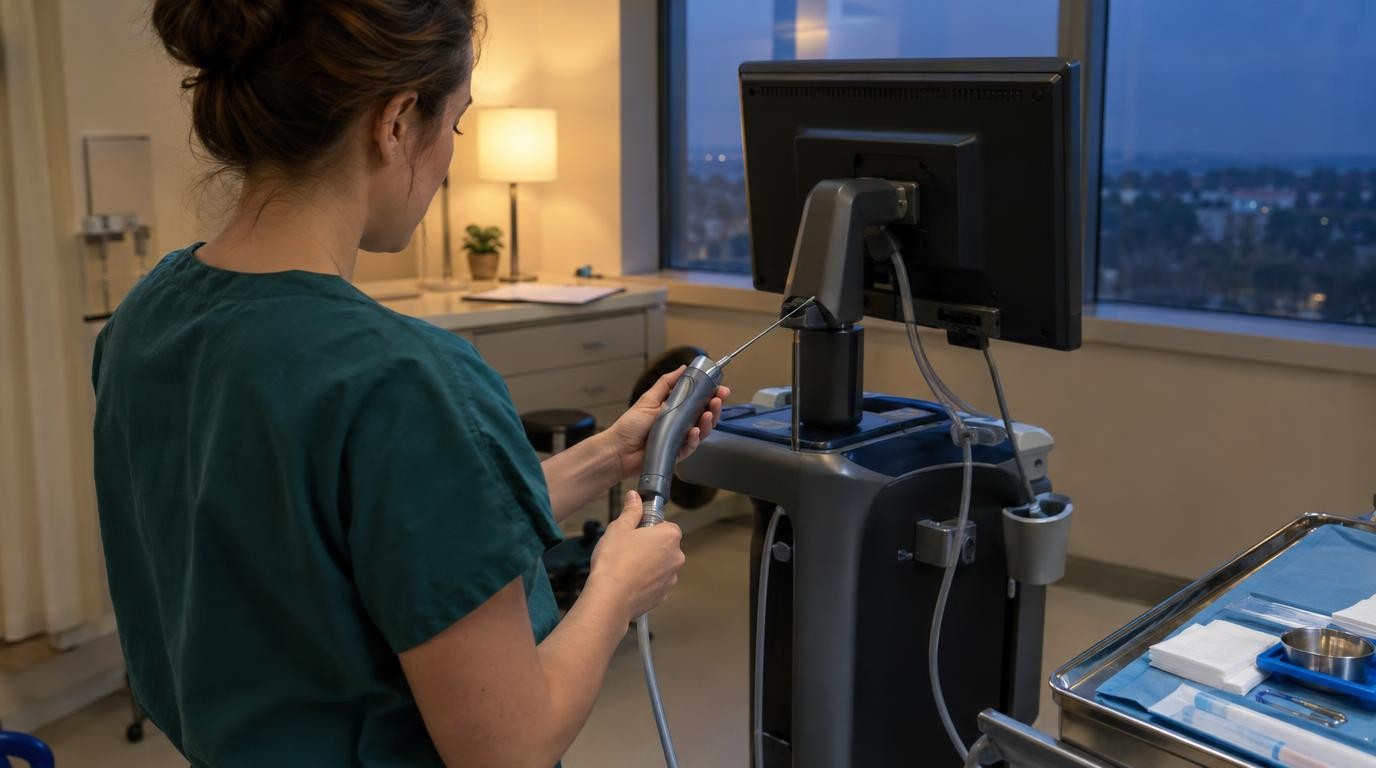
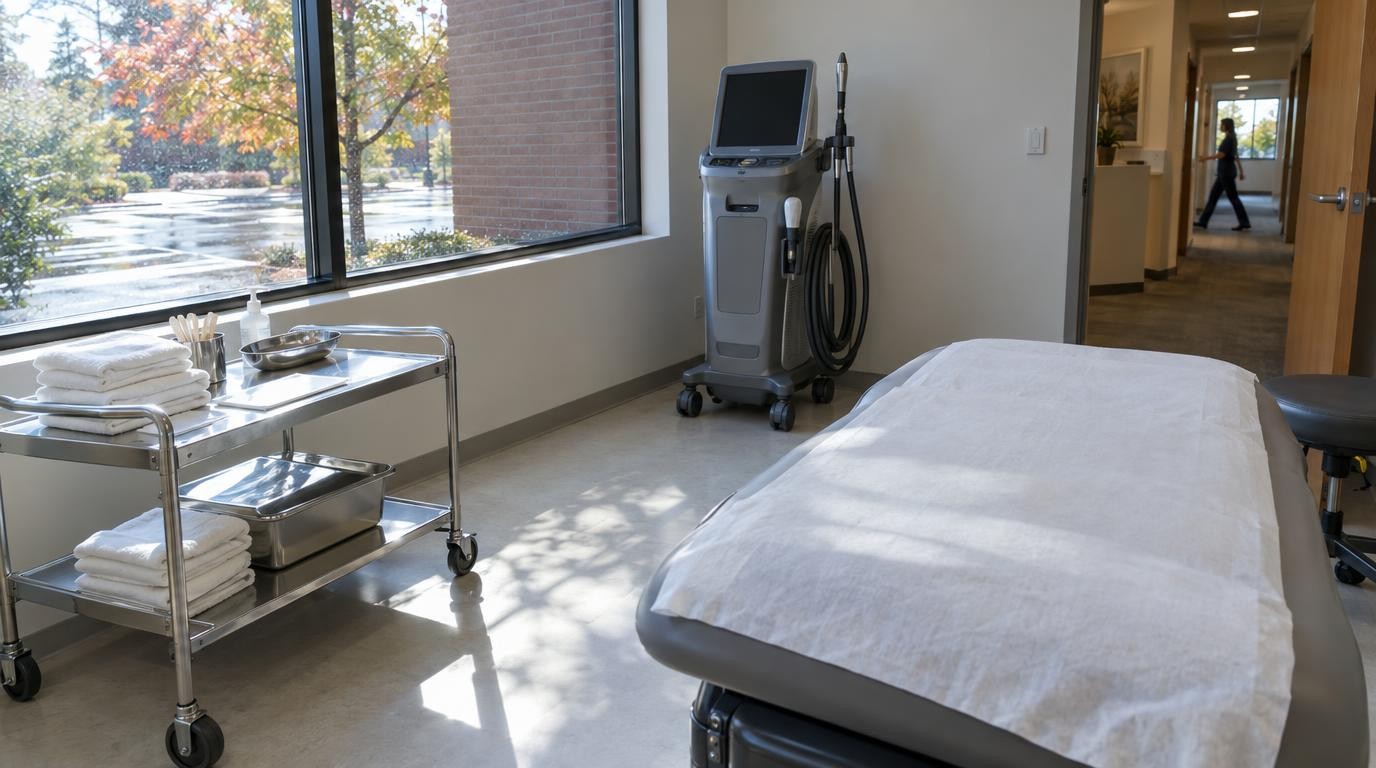
At Vip MediSpa, VASER treatment typically takes one to two hours, depending on the size and number of treatment areas.
What does Dr. Grishkevich assess before treatment?
Dr. Grishkevich evaluates the areas you want to change and whether localized fat removal fits your goals and overall health. Skin quality matters because a smaller fat deposit will not necessarily translate into smoother skin. This assessment also provides an opportunity to discuss what a realistic before and after difference would look like for you.
How are ultrasound energy and suction used during the procedure?
- Local anesthesia is used according to the treatment plan.
- Small incisions provide access to the selected area.
- A thin probe emits ultrasound energy to break down targeted fat.
- A specialized cannula suctions out the treated fat.
What is recovery like after VASER liposuction?
The appearance immediately after VASER liposuction is not the final shape. Incision sites and the treated contour change as you heal over the following weeks to months.
What changes can patients expect during early healing?
Expect some swelling, bruising and tenderness, and follow your individual instructions for incision care and activity. You may be advised to wear a compression garment. Our VASER treatment may involve smaller incisions, less downtime and less bruising or bleeding than traditional liposuction; none of these benefits is guaranteed for an individual patient.
When should patients ask their clinician about persistent symptoms?
Swelling usually starts to decrease by the end of the first week, according to an article on the American Society of Plastic Surgeons website. Contact our team promptly if swelling or pain worsens instead of easing, or if you develop fever, spreading redness or concerning incision drainage.
Can VASER lipo go wrong, and who should avoid it?
VASER liposuction has real surgical risks, including bruising, swelling, uneven contours, skin irregularity, infection and fluid collection called seroma; the American Society for Dermatologic Surgery also lists skin damage among possible serious liposuction complications. Anesthesia-related and other surgical complications are possible.
VASER alone is not a good fit if you seek substantial weight loss or need substantial loose skin removed. If a health condition may increase your surgical risk, wait for an individual medical assessment before deciding whether to proceed; the device itself is not an assurance of safety.
What side effects and complications should patients discuss?
Discuss your medical history, medications, skin quality and prior procedures with your own clinician before deciding on treatment. Seek urgent medical care for chest pain or trouble breathing.
A 2026 systematic review in Frontiers in Surgery included 13 studies of contemporary cosmetic liposuction techniques. Only one included study supplied fully extractable numerical data for overall complications, seroma and infection, so the reviewers described those safety findings rather than pooling them.
What does the 2026 liposuction review actually say about safety?
The 2026 Frontiers in Surgery review found low reported rates of overall complications, seroma and infection, while serious complications were rare (<0.1%) in the available evidence. That figure is not a VASER-specific complication rate or a prediction of an individual patient’s risk.
How does VASER liposuction compare with other contouring options?
VASER is an option for removing localized fat, but current comparative evidence does not establish that ultrasound assistance produces better contour results than every other liposuction method. The more important comparison may be between removing fat and addressing loose skin. Those goals call for different approaches and should not be treated as interchangeable.
Does the 2026 review show VASER works better than other liposuction methods?
No. The Frontiers in Surgery review qualitatively found comparable fat reduction and contour improvement across the methods it examined. Its findings should be read as a limited comparison, not as proof that every technique performs identically for every patient.
The review distinguished the methods as follows:
| Approach | What the review reported |
|---|---|
| Suction-assisted and ultrasound-assisted liposuction | Comparable fat reduction and contour improvement in the qualitative synthesis. |
| Power-assisted liposuction | Comparable contour outcomes, with generally improved operative efficiency. |
| Water-assisted liposuction | Comparable contour outcomes; studies reported reduced early postoperative pain and blood loss. |
| Laser- and radiofrequency-assisted liposuction | Comparable contour outcomes; studies reported modest short-term skin tightening. |
If you are comparing devices, our SmartLipo and traditional liposuction comparison explains another technique distinction.
What is the new alternative to a tummy tuck?
There is no single fat-removal treatment that replaces a tummy tuck when substantial abdominal skin removal is needed. The Cleveland Clinic distinguishes liposuction, which removes localized fat, from a tummy tuck, which removes excess skin and tightens abdominal muscles. VASER may address a fat deposit, but it should not be expected to accomplish skin removal.
What happens to VASER liposuction results years later?
Fat removed by VASER liposuction does not guarantee a fixed future shape. Remaining fat, changes in weight, aging and changes in skin firmness can all alter a treated area after it heals. A lasting improvement is possible, but a before and after photo cannot promise that an individual contour will remain unchanged over the years.
What happens years after liposuction?
The Mayo Clinic explains that liposuction reduces the number of fat cells in a treated area, while weight gain can still change fat levels and body shape. Skin also loses some firmness with age. The Frontiers in Surgery review assessed durability qualitatively because studies reported outcomes inconsistently; it does not establish a guaranteed long-term VASER result.
What can affect a patient’s contour after healing?
Weight changes can affect untreated and treated areas, while aging and reduced skin elasticity can change how skin lies over the underlying contour. These factors are separate from whether the original fat removal was successful. Our guide to how long cosmetic procedure results last provides broader context for thinking about results over time.
Frequently Asked Questions
Will VASER liposuction leave scars, and how many?
Yes, VASER liposuction requires small incisions, so small scars can remain. The number depends on how many insertion points are needed to treat the area, and their appearance varies with skin quality.
How long do I need to wear a compression garment after VASER liposuction?
You may be asked to wear a compression garment after VASER liposuction to help reduce swelling and support healing. An article on the American Society of Plastic Surgeons website says garments may be worn until week four or as otherwise directed. Follow your own postoperative instructions rather than assuming another patient’s schedule applies to you.
How soon can I return to work after VASER liposuction?
For most liposuction procedures, patients can return to work within a few days, according to an article on the American Society of Plastic Surgeons website. Your timing can differ with the area treated, the amount of fat removed and the physical demands of your job; this is not a VASER-specific promise.
When can I exercise again after VASER liposuction?
The article on the American Society of Plastic Surgeons website reports that most liposuction patients resume normal activities, including exercise, within two to four weeks or less. Recovery varies with the area treated and the amount of fat removed.
Will VASER liposuction remove cellulite or stretch marks?
No. VASER liposuction removes fat, not the fibrous bands responsible for cellulite or the skin changes that create stretch marks. The Mayo Clinic states that liposuction does not correct cellulite dimpling or remove stretch marks. A slimmer contour in an after photo does not mean either skin concern will disappear.
Can VASER liposuction be combined with another cosmetic procedure?
Yes, liposuction can sometimes be performed alongside another cosmetic procedure, but combining procedures can increase risks even if it consolidates healing time.
How can Tigard patients decide whether VASER lipo fits their goals?
If your main concern is a small to moderate localized fat deposit and you are in good overall health, VASER may be worth considering; substantial loose skin or a weight-loss goal calls for a different discussion. We provide VASER liposuction in Portland for patients from Tigard, Oregon. Dr. Grishkevich evaluates the proposed treatment areas and your health history to determine whether our local-anesthesia approach fits your goals.
What should patients bring to a VASER consultation?
- A clear description of the areas and changes that concern you.
- Relevant medical history, medications and prior procedures.
- Questions about skin elasticity and whether fat removal alone addresses your goal.
- Examples of photo results you find useful, along with questions about when those photos were taken.
Which questions help set realistic expectations for results?
Ask which areas are appropriate to treat, what changes are reasonable for your starting shape, and whether comparable patient photos show dates and any accompanying procedures. Ask what recovery instructions would apply to your plan and which risks matter most for your health history.
If you are considering treatment, contact Vip MediSpa in Portland, Oregon, for a consultation with Dr. Max Grishkevich. Our team can assess your goals and help you decide whether VASER liposuction is an appropriate way to address them.
This information is general and is not medical advice. Talk to a licensed clinician about your own situation before making a treatment decision.