Last updated: November 26, 2026
A glycolic acid chemical peel is an in-office treatment that exfoliates the skin’s surface to improve rough texture and uneven tone. It can be a useful choice for dull or rough skin, but a light peel is less reliable for visible fine-line improvement and will not correct deep wrinkles or sagging.
What Is a Glycolic Acid Chemical Peel, and How Does It Work?
A glycolic acid chemical peel applies an alpha hydroxy acid solution to produce controlled exfoliation. A superficial peel works mainly on the outer skin layer, making it a texture-and-tone treatment rather than a deep resurfacing procedure.
At Vip MediSpa, we offer glycolic and combination chemical peels. During a consultation, we assess the skin concern and select an appropriate peel rather than assuming that every glycolic solution will have the same effect.
How is a superficial glycolic peel different from a deeper chemical peel?
A superficial peel exfoliates the outer skin layer; a stronger peel penetrates further and generally brings more visible healing and greater risk. The clinical review “Glycolic acid peel therapy – a current review” explains that glycolic peel depth varies with acid concentration, coats applied and application time. “Glycolic” names the acid, not a guaranteed peel depth.
Which Skin Concerns Can a Glycolic Peel Help?
A glycolic peel may improve rough or dull skin, uneven tone and some sun-related discoloration by exfoliating damaged surface skin.
The American Academy of Dermatology’s chemical peel overview also lists some types of acne, freckles, age spots and melasma among concerns clinicians treat with peels. Improvement is possible, not a promise that a peel will clear a particular concern.
Can chemical peels be used to treat acne?
Yes. A peel may help some acne concerns, including surface congestion, but the type of acne and the skin’s condition affect whether a peel makes sense. A glycolic peel may improve mild acne-related marks or some shallow scars, but a light peel is unlikely to correct deep or pitted scars. Active breakouts may also call for treatment beyond exfoliation; our guide to medical-grade acne treatments explains why the approach should match the concern.
Can a glycolic peel improve dark spots or melasma?
A glycolic peel may soften the appearance of some dark spots and uneven tone, but melasma can be persistent and pigment changes can follow irritation. People with darker skin tones can benefit from appropriately selected superficial peels; skin tone alone does not rule treatment out. Assessment matters because the goal is improvement without provoking further discoloration.
What Happens During an In-Office Glycolic Peel?
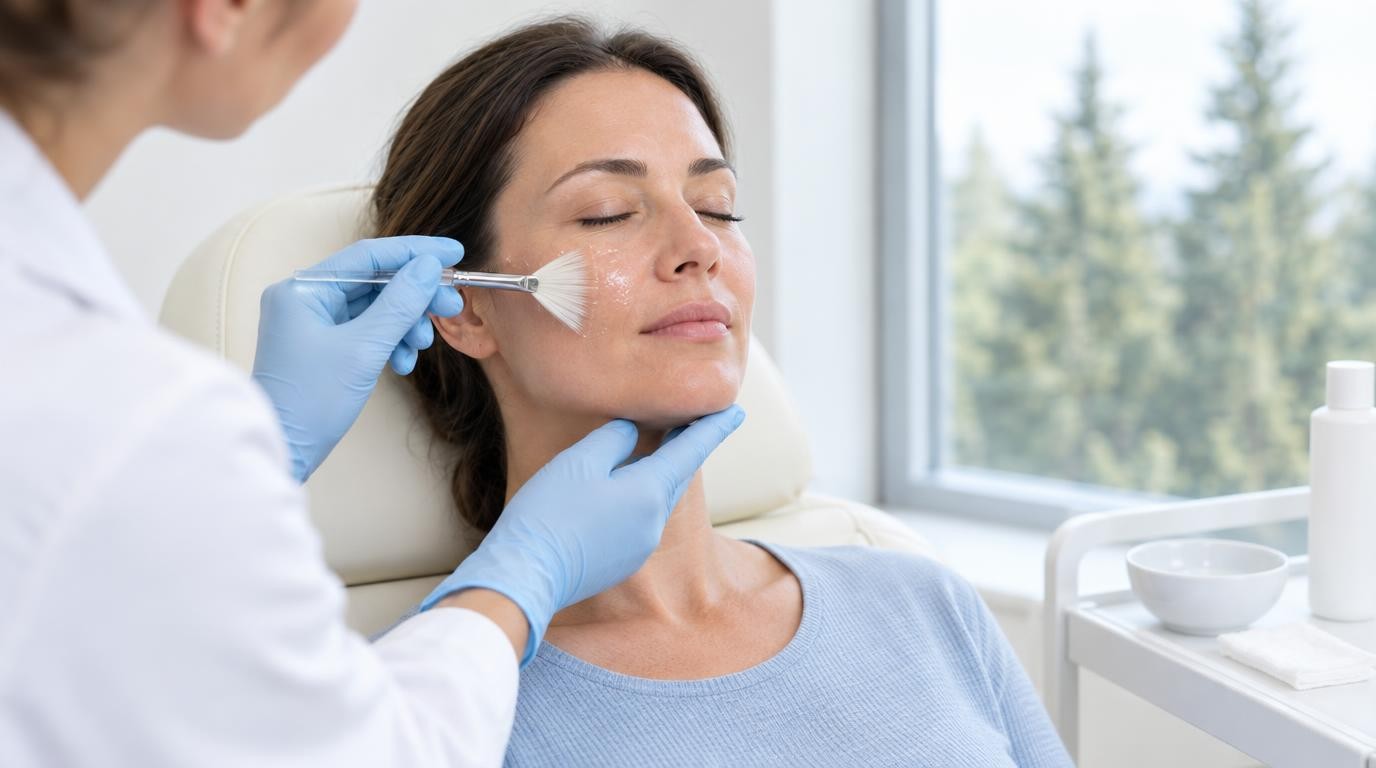
During an in-office glycolic peel, we cleanse the skin, apply the selected solution and end the treatment according to that solution’s protocol. The solution remains on the skin for minutes as appropriate, and brief stinging or burning can occur. At our Portland, Oregon, clinic, many peels take only a few minutes, depending on the area treated.
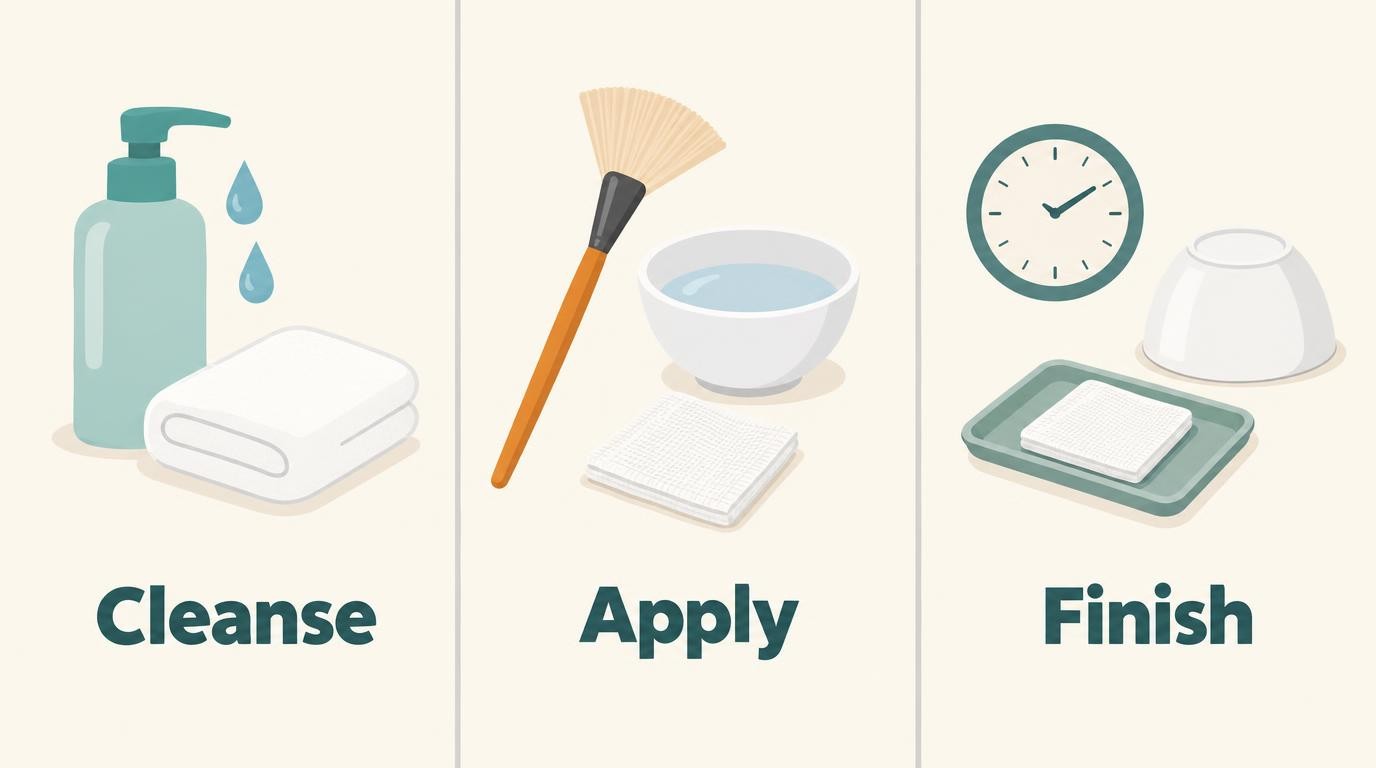
How is a superficial glycolic peel applied?
- Cleanse: Preparing the skin helps the solution reach the treatment area evenly.
- Apply: The selected solution is placed with an applicator, such as a brush, gauze or cotton tip.
- Observe and finish: We monitor the skin while the solution is on it, then end and remove the peel as required by the product and treatment protocol.
The application and finishing method can differ between formulas, so a peel should not be treated as a do-it-yourself version of an office procedure. For more on what makes a treatment light, see how light chemical peels work.
What Not to Do Before a Chemical Peel?
Do not arrive for a chemical peel without disclosing irritated skin, recent sun exposure, medications or an active skin concern. Preparation is individual: a clinician needs to examine the skin and select the peel before giving pre-treatment directions. Do not stop a prescribed treatment on your own to prepare for a peel.
What should you tell your esthetician before treatment?
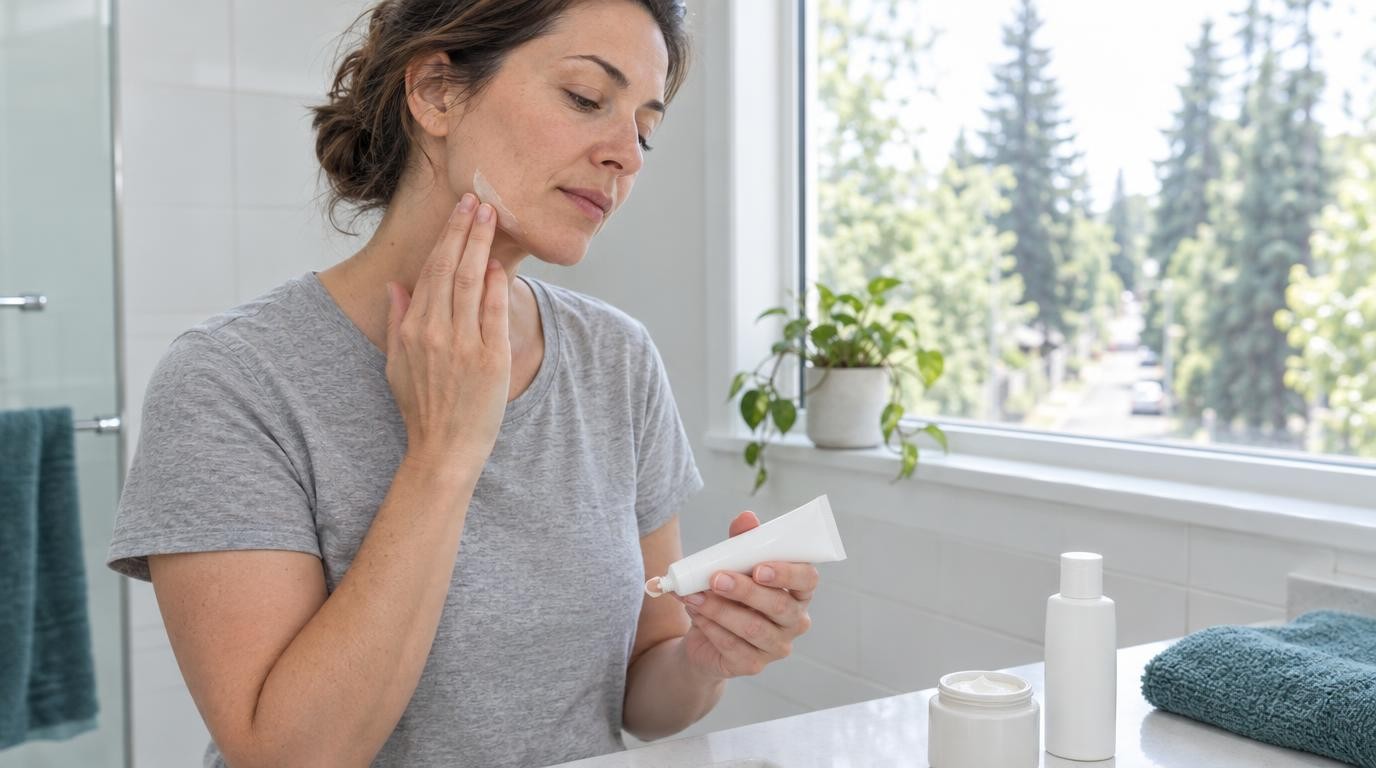
Tell our team about retinoid use, long-term medications, chronic skin conditions, current irritation and a history of cold sores. Mention recent sun exposure and previous pigment changes after skin treatments, too. That history helps us decide whether the skin needs more time to settle, whether preparation should change and which peel is suitable.
The American Academy of Dermatology’s chemical peel FAQs explains that some patients need a pre-peel skin-care plan for two to four weeks. At our clinic, preparation for a face peel starts two to three weeks before treatment: cleanse twice daily, apply the recommended moisturizer or cream once or twice daily, and use sunscreen every day. Limit UV exposure during preparation and follow our sunscreen instructions. Tretinoin may also be recommended in some cases.
The day before your peel, avoid makeup and follow the cleansing directions we give you. Confirm with our team when to pause your moisturizer rather than stopping the earlier moisturizing routine on your own.
How Long Does Recovery From a Glycolic Peel Take?
Recovery from a superficial glycolic peel is usually shorter than recovery from a deeper peel, although redness and visible flaking vary. At Vip MediSpa, a light peel generally completes shedding in approximately three to five days and requires no downtime. A medium peel’s effects usually persist for five to seven days, while a deep peel may take several weeks to heal fully. Skin can still feel tender after a light peel, so aftercare matters even when normal activities are possible.
When can you resume your usual skin care?
At Vip MediSpa, we generally advise resuming regular skin care after about three to five days, or once redness and peeling have resolved, according to your individual directions. Until then, use the gentle care recommended after your peel. Do not pick at flaking skin or restart potentially irritating products simply because visible shedding seems mild.
Why does sun protection matter after a peel?
Newly treated skin is more sensitive to sunlight, which can contribute to discoloration and compromise the result. Avoid sun exposure during early healing; afterward, use broad-spectrum sunscreen every day, avoid the sun from 10 a.m. to 2 p.m., and limit sun exposure overall.
What Results Can You Expect for Rough Skin and Fine Lines?
A glycolic peel is a more dependable choice for smoothing rough surface texture than for removing fine wrinkles. Brighter-looking skin and more even tone are possible, while visible line reduction is less certain and depends on peel depth and the person’s skin. Biological changes in skin do not guarantee a noticeable wrinkle result.
A 2024 clinical review of alpha hydroxy acids reports improved texture and luminosity alongside activity related to collagen and elastin synthesis. That mechanistic finding should not be read as proof that a superficial glycolic peel will visibly erase lines. Our before-and-after gallery can help frame a discussion of results, but another patient’s outcome cannot predict your own.
Do glycolic peels reduce wrinkles as well as retinoids?
It is not established that a glycolic peel reduces wrinkles as well as a retinoid. A light glycolic peel primarily exfoliates surface skin; retinoids are a separate treatment approach for fine lines.
How many peel sessions might you need?
There is no fixed course that guarantees a result. At Vip MediSpa, peels are generally spaced every two to three weeks until the desired result, with possible monthly maintenance; the plan depends on your skin and response. Some changes may take weeks or months to judge, so a treatment plan should leave room to assess the skin between visits.
What Is the Difference Between Glycolic and Salicylic Acid Peels?
Glycolic acid is a water-soluble alpha hydroxy acid (AHA) commonly chosen for surface texture and tone. Salicylic acid is an oil-soluble beta hydroxy acid (BHA) that can work within oily pores, so it is often chosen for clogged pores and acne. Neither is universally better for acne or discoloration. We offer glycolic and combination peels and choose an option based on your skin and goals.
Compare their acid type and common uses:
| What to consider | Glycolic acid | Salicylic acid |
|---|---|---|
| Acid type | Alpha hydroxy acid (AHA) | Beta hydroxy acid (BHA) |
| Solubility and typical focus | Water-soluble; primarily used to improve surface texture and tone | Oil-soluble; can work within oily, clogged pores |
| Common treatment goals | Rough texture, uneven tone and some acne concerns | Acne and some pigmentation concerns |
Which peel makes more sense when acne is the main concern?
That depends on the acne pattern, skin sensitivity and whether discoloration or roughness is also a priority. Salicylic acid’s use in acne care does not mean every person with acne needs a salicylic peel. A glycolic or combination peel may suit some goals, while others call for a different approach after the skin is assessed.
What Are the Risks, and Who Should Postpone a Glycolic Peel?
Temporary stinging, redness, peeling and sun sensitivity can occur after a glycolic peel. Uneven pigmentation is possible; infection and scarring are more serious potential complications, not expected parts of recovery. The American Academy of Dermatology says scarring is very rare when a dermatologist performs a peel; that is not a rate measured at our clinic. Stronger or poorly matched peels carry greater concern for injury and prolonged healing. Postpone treatment for active irritation or another unresolved skin issue until it has been assessed, and discuss your own risks with a licensed clinician.
The U.S. Food and Drug Administration’s chemical peel warning says the agency has not approved any chemical peel products and warns against using them without appropriate professional supervision. Concentration, repeated applications and time on the skin affect penetration and the potential for burns. Optimal therapeutic concentrations of alpha hydroxy acids with minimal side effects have not been precisely established, making individual selection and careful application important.
Is glycolic acid safe in pregnancy?
For acne care during pregnancy, an educational talk on the American Academy of Dermatology’s site notes that glycolic or lactic acid peels can be reasonable adjuncts. That does not mean every in-office peel is appropriate during pregnancy; tell our team if you are pregnant so the proposed peel can be assessed in light of your skin and prenatal care.
What symptoms need prompt care after a peel?
Seek prompt medical attention for severe or worsening pain, extensive blistering, signs of infection such as increasing warmth, pus or fever, or symptoms involving the eyes. Contact our team if burning, itching or swelling develops during recovery.
Frequently Asked Questions
Can a glycolic peel be used on areas other than the face?
Yes. Chemical peels can treat the neck, chest and hands as well as the face, depending on the skin concern and the peel selected. At Vip MediSpa, we assess the area and your skin before recommending a glycolic or combination peel. Treatment depth and aftercare may differ by area.
How long do glycolic peel results last?
At Vip MediSpa, chemical peel results can last months, even years with good sun protection, depending on peel depth; deeper peels generally last longer. A superficial glycolic peel should not be expected to deliver a permanent change, and how long its results last varies with your skin and sun exposure.
Can I wear makeup after a glycolic peel?
Wait until the treated skin has healed before applying makeup; applying it too early can increase the risk of complications. At Vip MediSpa, we give aftercare directions for your selected peel because redness and shedding vary between patients.
Should I avoid waxing before a glycolic peel?
Yes. Avoid facial waxing before a chemical peel, and do not wax treated skin while it is healing. An article on the American Society of Plastic Surgeons’ website advises avoiding facial waxing and dermabrasion before treatment. The appropriate preparation period depends on the peel and your skin.
Do I need medication before a peel if I get cold sores?
Not necessarily. For a medium or deep facial peel, particularly near the mouth or eyes, preventive antiviral medication may be considered if you have a history of cold sores. It is not an automatic requirement for a superficial glycolic peel. Your clinician will decide whether you need it.
What should I use on my skin while a glycolic peel heals?
Use gentle cleansing and the moisturizer recommended for your peel, and avoid picking or rubbing treated skin. At Vip MediSpa, we can recommend a mild cleanser and hydrating skin care suited to your recovery. Keeping skin moisturized helps prevent drying and cracking, which can increase scarring risk.
Is a Glycolic Peel the Right Choice for Your Goals?
A glycolic peel may be a good option when rough texture, dullness or uneven tone is your main concern and your skin is ready for treatment. If deeper wrinkles, sagging or scarring matter most, a peel alone may not meet your goal. The best next step is to match the concern to a realistic treatment plan.
When should you ask about an alternative to a peel?
Ask about alternatives when wrinkle correction, skin tightening or deeper scar improvement is the priority. Laser resurfacing or dermabrasion may be considered for texture, fine lines or some scars, although deeper scars may need a different or combined approach. Soft-tissue fillers can address lost facial volume, while substantial sagging may call for an assessment for a surgical option such as a facelift; fillers do not significantly tighten loose skin. For a texture-focused comparison, our guide to microdermabrasion versus chemical peels explains how the treatments differ.
If you are coming from Happy Valley, Oregon, contact Vip MediSpa to arrange a consultation at our Portland location. Our team can assess your skin, explain the glycolic and combination peels we offer, and discuss whether another approach better fits your goal. Dr. Max Grishkevich, MD, our founder and Medical Director, can help guide a realistic treatment decision.
This information is general and is not medical advice. Talk to a licensed clinician about your own situation before making a treatment decision.
About the doctor at Vip MediSpa
Dr. Max Grishkevich, MD – Founder and Medical Director of VIP MediSpa; aesthetic physician and member of the American Academy of Cosmetic Surgery.