

Last updated: November 22, 2026
BBL scars are incision marks that may form at liposuction donor sites and around the buttocks where fat is placed. At Vip MediSpa, our Brazilian Butt Lift (BBL) uses liposuction to collect fat and small access incisions to transfer it. Surgical recovery and scar fading follow different timelines, so an early incision mark is not a reliable picture of its eventual appearance.
Where do BBL scars form, and what do they look like?
Donor-area marks may appear on the stomach (abdomen), flanks, lower back, hips or thighs, depending on where liposuction is performed. Small placement-site marks may appear around the buttocks. BBL incision scars may look like small dots or short lines; they can initially be pink or darker than the surrounding skin. A Brazilian butt lift is not scar-free simply because its access incisions are small.
Are BBL scars on the buttocks or at liposuction sites?
Both locations are possible. The American Board of Cosmetic Surgery’s Brazilian butt lift overview describes harvesting fat from one or more areas with liposuction. Each liposuction access incision can leave a small scar, including on the stomach if fat is harvested there. Cleveland Clinic’s Brazilian butt lift overview describes making small incisions around the buttocks to place the fat. The number of donor-site entry marks depends on the surgical plan.
Does everyone’s BBL scarring look the same?
No. The number and position of access points depend on where fat is harvested and how it is placed. Skin pigmentation, a person’s tendency to form raised scars and individual healing can also affect how noticeable a mark becomes. Another patient’s photos therefore cannot predict the location or appearance of your scars. BBL before and after photos can show visible changes, but they cannot predict how your own incisions will heal.
Does BBL leave you with scars?
Yes. A BBL can leave lasting small marks at liposuction sites and at the incisions used to place fat around the buttocks. These BBL marks are sometimes called injection scars. They often become less noticeable, but no surgical technique can guarantee invisible scars.
How does a Brazilian butt lift create those incision marks?
A BBL generally involves three steps:
- Liposuction removes fat from selected donor areas through small skin incisions.
- The collected fat is processed for transfer.
- Fat is placed through small access incisions around the buttocks.
Where does the transferred fat come from?
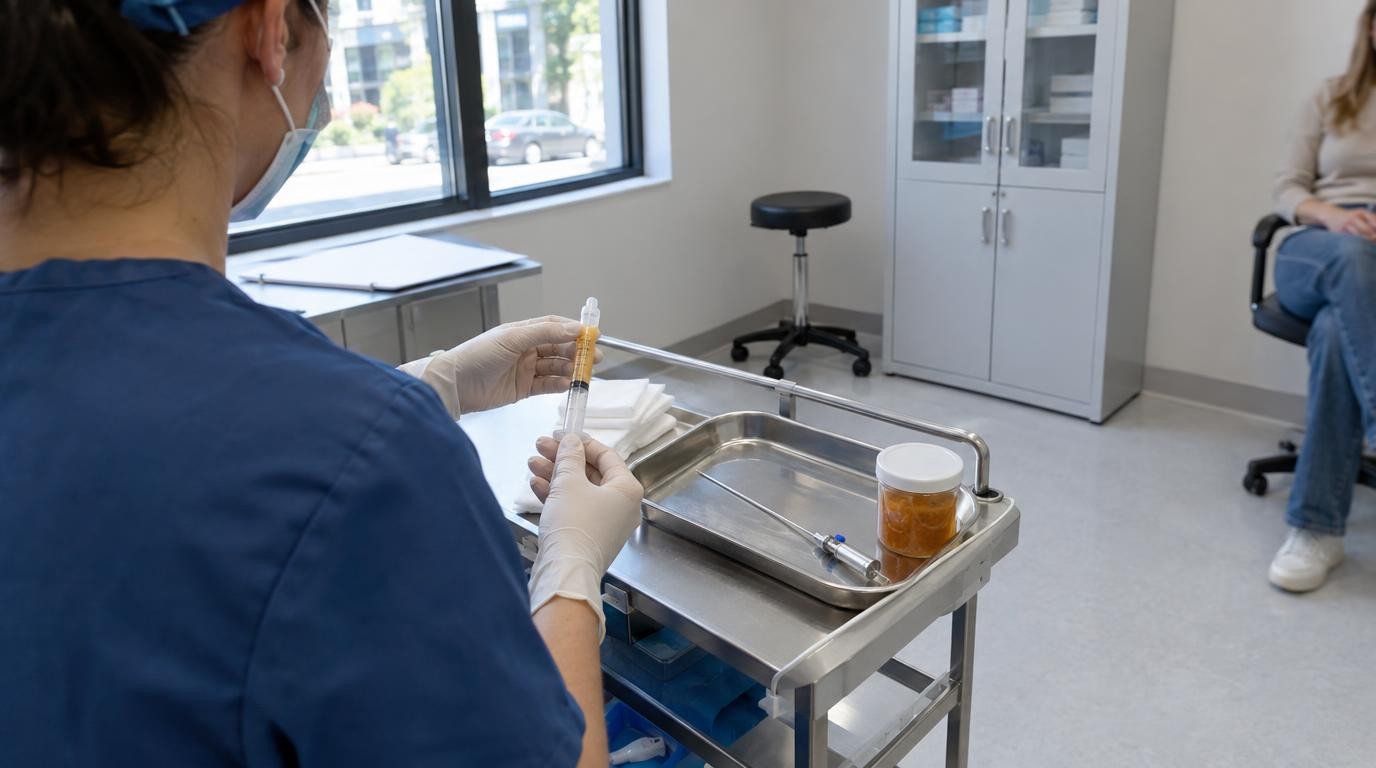
We typically harvest fat from the lower back and sides, often including the abdomen. Other areas may be considered according to your anatomy and surgical plan. The liposuction cuts can leave marks outside the buttocks; our article on liposuction and fat grafting discusses the combined procedure.
How is the harvested fat placed?
The collected fat is processed before transfer through access points around the buttocks. Current safety recommendations call for injection into the subcutaneous fat layer, not the muscle: intramuscular placement has been associated with fatal pulmonary fat embolism. Ultrasound can help a surgeon see the cannula and check its placement in the subcutaneous layer during injection, as an article on the American Society of Plastic Surgeons website about improperly performed BBLs discusses. Ultrasound does not eliminate surgical risk or replace subcutaneous-only placement.
When do BBL scars fade after surgery?
BBL incision scars can soften and fade over the months following surgery, although individual marks may remain visible. The American Society of Plastic Surgeons’ buttock-enhancement results page says scarring can take up to two years to reach its mature appearance; that page covers buttock enhancement more broadly, including operations with larger incisions. The American Board of Cosmetic Surgery’s BBL overview estimates six to eight weeks for overall recovery, not for scars to fade. No individual scar has a guaranteed fading deadline.
How is surgical recovery different from scar maturation?
Surgical recovery concerns healing from liposuction and fat transfer and gradually resuming activities. Scar maturation is the longer process in which an incision mark may soften, flatten or become less noticeable. A healed BBL access mark can remain visible after activity restrictions end; there is no exact fading deadline for every patient.
The American Board of Cosmetic Surgery’s BBL quick facts gives approximate work and overall-recovery milestones. An article on the American Society of Plastic Surgeons website about BBL recovery says many patients are up and walking a day or two after surgery. These are activity milestones, not estimates of when scars disappear:
| Milestone | What the guidance says |
|---|---|
| Up and walking | American Society of Plastic Surgeons: a day or two after surgery for many patients; individual recovery varies |
| Return to work | American Board of Cosmetic Surgery: one to two weeks, with limited sitting initially |
| Overall recovery | American Board of Cosmetic Surgery: six to eight weeks |
Should BBL scars still be visible after eight weeks?
Yes. A visible mark at eight weeks does not by itself mean healing has failed: an incision can have healed while its scar remains noticeable and continues to change. A mark that becomes increasingly raised or changes unexpectedly deserves an assessment rather than an assumption that it is normal scar maturation.
What is the hardest plastic surgery to recover from?
No single plastic surgery is the hardest for everyone. BBL recovery can be demanding because liposuction sites and the grafted buttocks heal at the same time, and sitting and sleeping positions are restricted. Returning to work after one to two weeks does not necessarily mean those restrictions have ended.
What can you do to help BBL scars heal?
BBL scar care begins with protecting the incisions and following your postoperative wound-care instructions. Clean and dress each site as directed, use any prescribed garment as instructed, and avoid picking at healing skin. We may recommend protective clothing or a compression garment for six to eight weeks after a BBL. That garment period is not a scar-fading timeline. Keep marks protected from sun exposure. Wait until the skin is fully closed before trying scar products.
When is it safe to use silicone or other scar products?
Do not put silicone sheets, creams or other scar products on an open or draining incision. Once the skin is fully closed, silicone sheets or gel may be considered for a raised scar; they cannot erase it, and the amount a BBL access mark will improve is uncertain. A persistent raised mark may need a different approach; our guide to raised scars after cosmetic surgery explains why scar type matters.
How do I get rid of scars on my buttocks?
Scars generally cannot be erased. Once an incision has fully closed, silicone products or gentle massage may be considered. A persistent raised scar needs assessment and may call for clinician-directed treatment, such as a corticosteroid injection. For a depressed scar, revision or fat transfer beneath the scar may improve its contour. A scar tethered to deeper tissue also needs assessment; adding fat alone does not necessarily release the tether. None of these approaches guarantees that a scar will disappear.
How long after BBL can I sit?
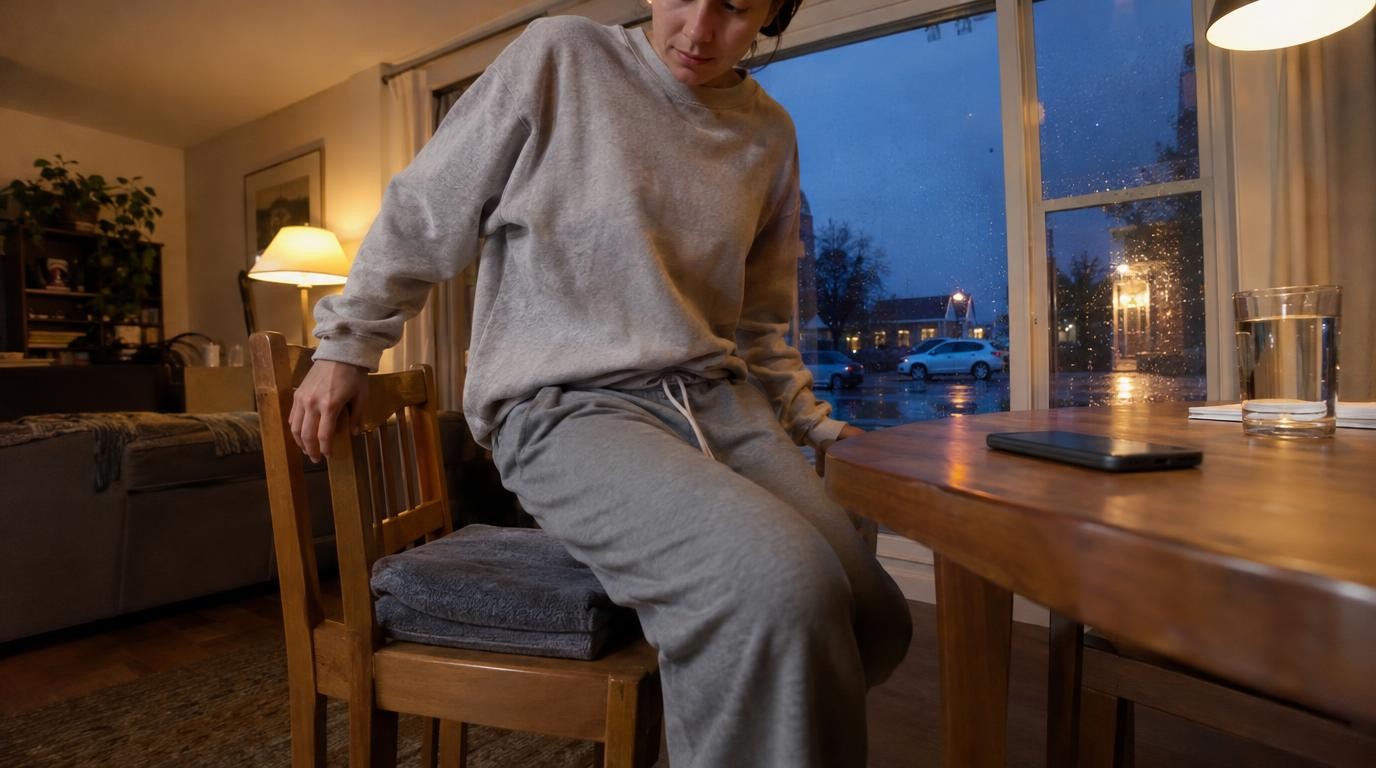
We advise avoiding sitting during early BBL recovery; published sitting restrictions extend from six weeks to at least eight weeks, depending on the protocol. Your operating surgeon will decide when you can sit normally based on your healing. An article on the American Society of Plastic Surgeons website about BBL recovery quotes a surgeon advising against prolonged pressure on the buttocks for the first six weeks and limiting necessary sitting to about 10 minutes at a time. A separate ASPS recovery article advises against sitting directly on the buttocks for at least eight weeks. When supported sitting is allowed, a pillow under the thighs can shift pressure away from the transferred fat; it does not replace your surgeon’s clearance to sit normally.
When can I return to work and normal activity?
The American Board of Cosmetic Surgery estimates that patients can return to work in one to two weeks, with limited sitting at first; an ASPS recovery article says many patients return to normal activities after six to eight weeks. Your surgeon will tailor those timelines to your recovery. A standing desk may help if your work otherwise requires prolonged sitting. The ASPS recovery article says light activity such as fast-paced walking may resume after about one month. Heavy lifting and strenuous activity remain restricted during early recovery.
How do sitting restrictions affect incision care?
Positioning instructions primarily protect the grafted area from pressure; they do not replace cleaning, dressing checks or other incision care. A sitting aid, if your surgeon permits one, should not rub or press on a healing placement-site incision. Check garment fit as instructed, and raise concerns about friction or a wound that opens rather than adjusting postoperative restrictions on your own.
What risks and healing problems should you discuss before a BBL?
A BBL can involve scarring, infection, bleeding, skin loss, asymmetry and anesthesia complications. Nerve injury can cause numbness or tingling that may persist, although this is not a common outcome. The American Society of Plastic Surgeons’ buttock-enhancement risks page also lists seroma (fluid collection), fat necrosis (death of some fat tissue), blood clots and possible revision surgery. Fat necrosis differs from skin necrosis. Pulmonary fat embolism is uncommon but can be fatal. An article on the ASPS website about BBL safety says survey data after changes in surgical technique suggested a mortality rate of about one in 15,000. That survey estimate cannot predict an individual patient’s risk.
A 2026 retrospective series of 7,000 BBL procedures using a subcutaneous-only injection protocol reported no pulmonary fat embolisms, deep vein thromboses or pulmonary embolisms. It reported seromas in 23% of cases, anemia in 6.6%, fat necrosis in 1.9% and infection in 0.43%. Those are findings from that series under its specific protocol, not a guarantee that a complication cannot occur.
Before surgery, check with your operating surgeon about your health, available donor fat, the surgeon’s qualifications, the surgical facility and your individual risks. Confirm that fat will be placed only in the subcutaneous layer and ask how the surgeon will verify its placement, including whether real-time ultrasound will be used. An ASPS recovery article advises consulting a board-certified plastic surgeon. An article on the ASPS website about BBL complications identifies inexperienced surgeons and unlicensed practitioners as factors that can contribute to complications.
Who may not be a good candidate for fat transfer?
A person without enough suitable donor fat may not be a good candidate for the desired amount of fat transfer. Health concerns, an unstable weight or expectations that fat transfer cannot meet may also change the recommendation. If sagging or excess skin is the main concern, a BBL adds volume but does not remove that skin. Removing loose skin requires an excision and leaves a different, potentially more substantial scar than a BBL’s small access marks. As one example of a separate skin-removing procedure, the American Society of Plastic Surgeons’ description of the Miami thong lift says its scar is placed in an area typically covered by a bikini.
Which symptoms need prompt medical attention?
Contact your surgical team promptly about spreading redness, fever, concerning drainage, new discoloration or blistering of skin near an incision, or a wound that opens or begins to break down. These skin changes need assessment rather than an assumption that they are normal scar healing. A painful, swollen, red or warm leg also needs prompt attention as a possible blood clot. Seek emergency medical care for sudden breathing difficulty, chest pain, coughing up blood, a rapid heartbeat or fainting. An article on the ASPS website about traveling after a BBL lists these leg and breathing symptoms as possible signs of deep vein thrombosis and pulmonary embolism.
How do BBL scars compare with butt implant scars?
A BBL can leave multiple small marks at liposuction donor sites and around the buttocks. Butt implants usually require a larger incision in the crease between the buttocks, although its position can vary with the surgical approach. Butt implants may be an option for someone without enough fat for a BBL. The main differences are:
| Consideration | Fat-transfer BBL | Butt implants |
|---|---|---|
| Where scars can form | Multiple small access marks at liposuction donor sites and around the buttocks where fat is placed | Usually a larger incision scar in the crease between the buttocks; location varies with the approach |
| Donor fat | Requires enough suitable fat to harvest and transfer | Does not require harvested fat |
| How volume is added | Transferred body fat | Implants |
Can either procedure avoid scars entirely?
No. Small BBL access incisions can leave lasting marks, and implant placement also leaves a scar. An implant incision and a liposuction entry point differ in purpose and may leave different-looking marks; neither procedure can promise invisible scars.
What are the risks of buttock implants?
Butt implants carry risks of infection, implant displacement, capsular contracture (scar tissue tightening around an implant), wound-healing problems and possible further surgery. They also involve anesthesia and leave an incision scar. These risks matter alongside the amount of volume you want and whether you have enough donor fat for a BBL.
Frequently Asked Questions
Did Kim Kardashian get a BBL?
It is not possible to determine whether Kim Kardashian has had a BBL from her appearance. Photos and online speculation cannot establish someone’s surgical history.
How long do butt injections last after a BBL?
Transferred BBL fat that survives healing can remain for years. Results can change with age or weight fluctuations and are not a fixed-duration injection treatment. This answer concerns transferred body fat, not other kinds of buttock injections.
How much transferred fat survives a BBL?
An article on the American Society of Plastic Surgeons website quotes a surgeon estimating that 20% to 40% of transferred fat may be absorbed during healing; the amount varies by patient. Around month three, buttock size and shape give a reasonably good indication of what will remain, although the contour can continue to refine during months three to six. Early postoperative fullness is not the final volume.
How should I sleep after a BBL?
Sleep on your stomach or side rather than directly on your buttocks during early recovery, unless your postoperative instructions say otherwise. This avoids direct pressure on the transferred fat. Keep pillows and bedding from rubbing healing incisions.
When will my surgeon check my BBL incisions?
An early postoperative visit checks how your incisions are closing and whether any stitches need removal. Further visits assess healing and your developing result. The appointment schedule depends on your surgical plan.
When will I see my final BBL shape?
The American Board of Cosmetic Surgery says BBL results are typically final within six months, after residual swelling has subsided. That estimate concerns body contour, not a deadline for scars to fade.
Could a dent after a BBL be something other than an incision scar?
Yes. A dent may be an indented incision scar or a liposuction-related contour irregularity rather than a scar in the skin. We can examine the skin and underlying tissue to distinguish them. An American Society of Plastic Surgeons article on BBL complications describes divots, lumps and other contour irregularities after overly aggressive liposuction; some cannot be fully corrected.
What happens 10 years after BBL?
The American Board of Cosmetic Surgery notes that fat cells removed with liposuction do not return to the donor area, while fat cells that survive transfer can remain for years. Significant weight changes and aging can still alter body contours and a BBL’s size and shape, so there is no guaranteed 10-year appearance. Incision scars may become less noticeable over time, but they can remain visible.
Are BBLs worth it?
That depends on whether the potential change in contour is worth the incisions, recovery restrictions and surgical risks to you. A BBL can use your own fat to add buttock volume and reshape donor areas, but it cannot promise a particular shape, invisible scars or survival of all the transferred fat. Pulmonary fat embolism is an uncommon but potentially fatal risk.
What is BBL smell?
An unpleasant odor is not an expected feature of a healed BBL scar. Postoperative odor can come from wound drainage or bacterial growth and may signal an infection. Contact your surgical team promptly about foul-smelling drainage, particularly with spreading redness, increasing pain or fever.
When should you discuss BBL scars with a Portland surgeon?
For patients in Happy Valley, Oregon, and the surrounding Portland area, a history of raised scars or slow-healing incisions is relevant when considering how BBL access marks might heal. After surgery, a mark that becomes increasingly raised deserves assessment; an opening or draining incision needs more prompt attention.
If you have had raised scars or slow-healing incisions, bring photographs of those areas for review. To discuss likely incision locations, recovery and fat-placement safety, contact Vip MediSpa in Portland, Oregon for a BBL consultation.
This information is general and is not medical advice. Talk to a licensed clinician about your own situation before making a treatment decision.
About the doctor at Vip MediSpa
Dr. Max Grishkevich, MD – Founder and Medical Director of VIP MediSpa; aesthetic physician and member of the American Academy of Cosmetic Surgery.






