

Last updated: November 5, 2026
The 2024 U.S. Botox Cosmetic prescribing information specifies 20 units for forehead lines plus 20 for glabellar frown lines: 40 units for both areas, not the forehead alone. This FDA-labeled regimen is for the temporary improvement of moderate to severe forehead lines associated with frontalis-muscle activity in adults. Forehead-only treatment and “baby Botox” are separate approaches, and no published range determines your personal dose. At VIP MediSpa, our Botox injections in Portland, Oregon are planned around your facial movement and goals.
How many units of Botox do you need for the forehead?
For forehead-only treatment, EyeWiki from the American Academy of Ophthalmology describes a typical Botox dose of 10–15 units divided among six to eight forehead sites. Forehead-only treatment is off-label: the FDA-labeled forehead-lines regimen also treats the glabella.
For the separate “baby Botox” approach, an article on Cleveland Clinic’s site lists an average of 10–30 units for the forehead, using smaller amounts per injection. That figure is specific to the approach described there, not a recommendation for every forehead treatment.
In the labeled regimen, five forehead sites receive 4 units each, and five sites between the brows receive another 4 units each. These are label specifications, not instructions for your personal injections.
These figures describe different approaches:
| Approach | Unit figure | What the figure covers |
|---|---|---|
| Forehead-only treatment, off-label | EyeWiki: typically 10–15 Botox units | Horizontal forehead lines |
| “Baby Botox” for the forehead | Cleveland Clinic article: average 10–30 units | Forehead treatment using smaller amounts per injection |
| FDA-labeled forehead-lines regimen | 2024 U.S. Botox Cosmetic prescribing information: 20 + 20 = 40 units | Forehead lines and glabellar frown lines together |
Why might forehead Botox also include the frown lines?
Forehead Botox may include frown-line treatment because the muscles above and between the brows affect brow position in different directions. The forehead muscle raises the brows, while muscles in the glabella pull them inward and down. The labeled plan treats both areas, but a balanced result does not require the same plan for every patient.
Relaxing the forehead muscle without considering the muscles between the brows can change how the brows sit when your face is at rest or in motion. A Botox Cosmetic dosing and technique guide hosted by the American Society for Dermatologic Surgery advises treating forehead lines with glabellar lines to minimize the potential for brow drooping. In clinical practice, observing how someone raises and furrows their brows is more informative than choosing a total from a chart alone.
Should you treat only your forehead or both areas?
Forehead-only treatment may be considered when horizontal lines are your main concern, but brow position and muscle activity matter too. Your preferred degree of movement also helps shape the choice; the labeled two-area plan is not required for everyone.
What determines your personal forehead Botox dose?
Your forehead Botox dose depends on muscle activity, brow position, line severity, treatment history and how much expression you want to keep. An in-person assessment shows what happens when you raise your brows and frown. A photo or your age alone cannot establish injection sites or the right unit distribution.

Lines visible mainly during movement may respond differently from lines that remain when the face is relaxed. Previous treatment also helps inform a plan: what changed, what movement remained and whether the brow position felt right.
In addition to Botox, we offer Dysport, Xeomin and Daxxify. The U.S. Botox Cosmetic prescribing information says its units cannot be directly converted into units of another botulinum toxin product, so ask about the proposed dose for the specific product being used. For lines that remain visible at rest, we can assess whether a skin-directed treatment we offer, such as laser skin resurfacing or microneedling, better fits your goals. For further reading, see our guide to Botox and Dysport for wrinkle treatment.
Is a higher total of Botox units a lot?
A total above the labeled forehead-and-glabella regimen does not, by itself, reveal whether a plan is appropriate. Other treated areas can contribute to the total: the 2024 U.S. Botox Cosmetic prescribing information specifies 20 units for forehead lines, 20 for glabellar lines and 24 for lines beside the eyes, totaling 64 units across three areas. For more on what Botox around eyes can and can’t treat, read our guide to eye-area treatment.
How many units for an eyebrow lift?
EyeWiki from the American Academy of Ophthalmology describes a typical 10–15 Botox units divided among three sites near the outer brow for a lateral brow lift. This is a separate, off-label treatment, not an automatic part of forehead-line injections. The lift is small and temporary, and the amount of elevation is unpredictable; the figure is not a dose for the FDA-labeled forehead-lines regimen.
How does Botox smooth forehead lines?
Botox temporarily reduces the muscle activity that creates movement-related horizontal forehead lines. As the forehead muscle contracts less strongly, the overlying skin can appear smoother when you raise your brows. Lines already visible at rest may soften without disappearing completely, because changing muscle movement does not reverse every change in the skin.
Botox is not a filler and does not create immediate fullness or stimulate collagen through PMMA microspheres. Those descriptions concern Bellafill, a distinct treatment. The U.S. Botox Cosmetic prescribing information identifies botulinum toxin and its formulation ingredients, not Bellafill’s bovine collagen or PMMA. For more on the difference between movement-related and persistent lines, see our guide to fine-line reduction.
What happens during a forehead Botox appointment in Portland?
At VIP MediSpa in Portland, Oregon, your approximately 15–20-minute Botox injection appointment includes discussing your horizontal and frown lines, brow movement and preferred degree of expression; planning the injection sites; applying topical numbing cream; and placing small injections into the targeted areas.
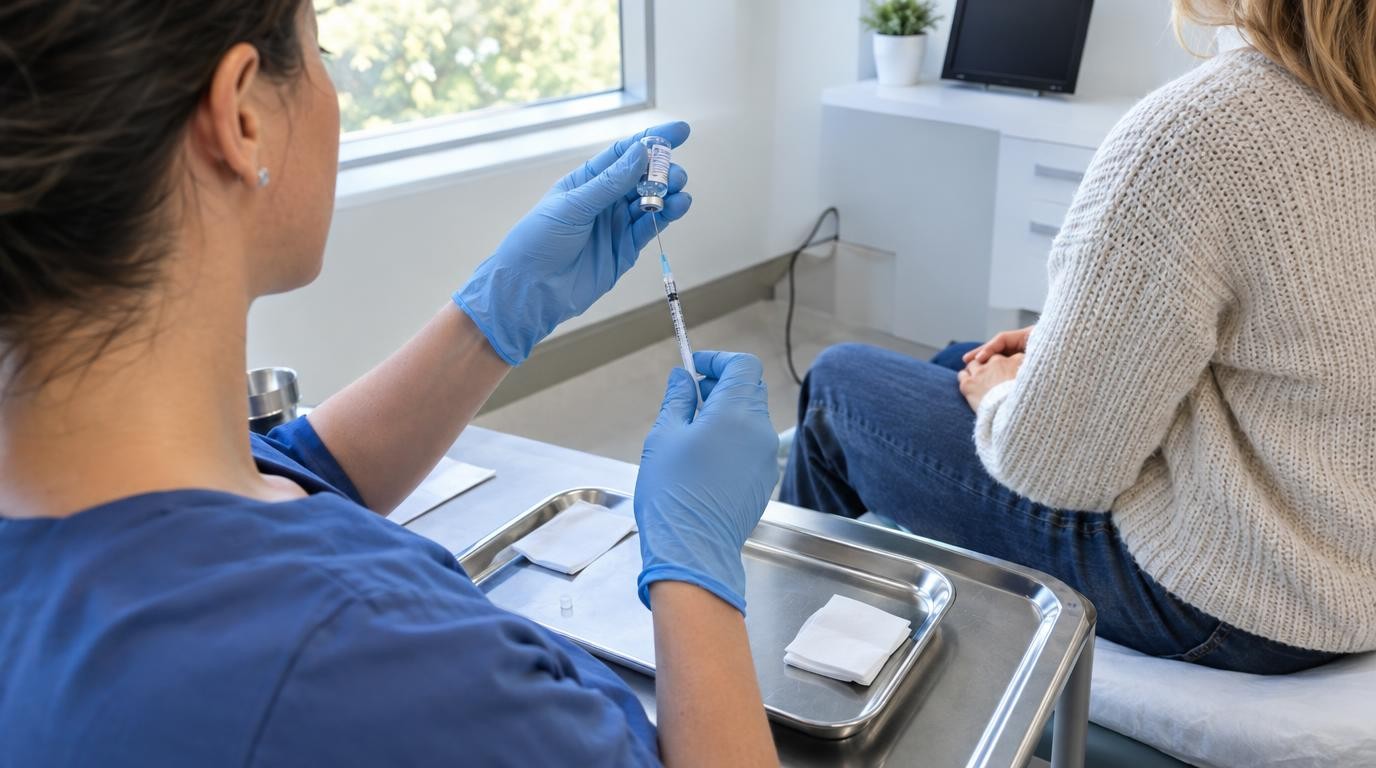
Sensitivity in the treated areas may last up to 24 hours after your appointment. The injections do not provide an immediate preview of the final cosmetic result; muscle activity changes over the following days.
What should you do after forehead Botox injections?
After forehead Botox, avoid rubbing or massaging the treated areas for 24 hours and do not lie down for two to four hours after the injections, as Mayo Clinic recommends.
For a fuller discussion of possible reactions, see this educational guide to Botox side effects.
What is the 4-hour rule for Botox?
The “4-hour rule” refers to staying upright after injections. An article on Cleveland Clinic’s site suggests staying upright for three to four hours; it also notes little evidence that briefly bending down affects how Botox settles. A momentary bend does not automatically ruin the result.
When will you see forehead Botox results, and how long do they last?
Forehead Botox usually begins working in one to three days, may take a week or more to show full results, and may last three to four months, depending on the concern being treated, according to Mayo Clinic.
What are the risks of forehead Botox, and who should avoid it?
Forehead Botox can cause temporary bruising, swelling, headache or brow or eyelid drooping. The Botox Cosmetic prescribing information says treatment is contraindicated if you have an infection at a proposed injection site or known hypersensitivity to a botulinum toxin preparation or a formulation ingredient. Botox Cosmetic also carries a boxed warning about toxin effects spreading away from the injection site. The 2024 FDA prescribing information reports no confirmed serious case of distant spread at recommended cosmetic doses, but the warning still applies.
In the forehead-line clinical studies summarized in the 2024 prescribing information, headache occurred in 9% of Botox Cosmetic recipients versus 5% given placebo; eyelid drooping and brow drooping each occurred in 2% of Botox recipients versus 0% given placebo. Talk to your own clinician about pregnancy, breastfeeding, neuromuscular conditions or medications that affect muscle or nerve function before treatment; these are not additional labeled contraindications.
Seek medical help right away if swallowing, speaking or breathing becomes difficult after treatment. Those symptoms can signal a serious reaction even though most cosmetic-treatment concerns are local and temporary.
Frequently Asked Questions
What is the best age to start forehead Botox?
For adults, there is no single best age to start forehead Botox. A Mayo Clinic Press article suggests considering changes in your skin rather than a birthday, while an American Society of Plastic Surgeons article discusses movement-related lines that begin to linger. At VIP MediSpa, we assess your forehead movement and goals rather than using an age cutoff for adults.
Is 70 units of Botox a lot?
Seventy units is more than the 64 units specified in the 2024 FDA Botox Cosmetic label for combined treatment of forehead lines, frown lines and crow’s feet; it is not a labeled forehead-only dose. Whether a 70-unit total is appropriate depends on every area being treated, not the total alone.
How often can you repeat forehead Botox?
For continued results, Botox injections are generally repeated at least three months apart. Mayo Clinic says effects may last three to four months and follow-up injections should be spaced at least three months apart.
Can you exercise after forehead Botox?
You can usually return to normal activities after forehead Botox, but exercise may increase bruising. The Cleveland Clinic article says there is little evidence that physical activity changes how Botox settles; increased blood pressure may promote bruising. If you bruise easily, consider waiting a few hours before exercising.
Can you touch your forehead after Botox?
Light touching is generally fine; rubbing or massaging an injection site is different. If you need to wash your face, use gentle contact and follow your injector’s instructions.
Can baby Botox prevent forehead wrinkles?
Baby Botox may temporarily reduce the muscle activity that contributes to early expression lines, but it cannot prevent all forehead aging. The Mayo Clinic Press article notes that preventive treatment does not stop changes such as loss of collagen, elasticity or facial fullness. The American Society of Plastic Surgeons article adds that starting treatment without visible need may not provide meaningful long-term benefits.
How can you choose a forehead Botox plan that fits your goals?
Compare plans by considering which lines bother you, how much forehead movement you want to keep and where your brows sit at rest. Ask which areas would receive injections and how many Botox units are proposed for each. We can discuss how the FDA-labeled combined forehead-and-glabella plan compares with off-label forehead-only treatment, including why treating the two areas together may reduce the potential for brow drooping.
If you are considering treatment in Portland, Oregon, contact VIP MediSpa for a forehead Botox consultation. We can explain how your brow movement shapes the proposed plan and what degree of smoothing is realistic; no quoted unit range guarantees a particular result.
This information is general and is not medical advice. Talk to a licensed clinician about your own situation before making a treatment decision.






