Last updated: November 16, 2026
Bellafill before and after photos can show changes in smile lines or eligible cheek acne scars, but they cannot predict how your face will respond. The most useful photos show the same concern under comparable conditions and tell you when each image was taken. If you are considering Bellafill injections in Portland, Oregon, use photos to guide questions rather than set a guaranteed outcome.
What Should Bellafill Before and After Photos Tell You?
Bellafill before and after photos should help you assess a specific change in a treated smile line or cheek acne scar, not promise an identical result. Look for consistent lighting, camera angle, and facial expression. A useful caption identifies the treated concern, the sessions involved, and the interval between treatment and the after photo.
We are not displaying a gallery of our own Bellafill patients’ results here. For a labeled visual example, see the American Society for Dermatologic Surgery’s Bellafill before-and-after example. It shows treatment of chickenpox scars, an off-label use—not results for FDA-approved cheek acne-scar treatment or smile lines.
What Makes Before-and-After Photos Comparable?
For Bellafill smile lines before and after images, compare the folds beside the nose while the person makes a similar expression in both photos. For Bellafill acne scars before and after images, look at the same cheek from the same angle: side lighting can make shallow depressions appear more pronounced, while softer lighting can hide them. Changes to unrelated areas of the face are not evidence that Bellafill caused those changes.
What Details Should a Bellafill Photo Caption Include?
A caption should name the treated concern, identify whether the image was taken immediately after injection or at a later follow-up, and give the session count. Immediate fullness can reflect swelling as well as filler, so an unlabeled after photo is harder to interpret. Ask whether any other facial treatment occurred between images before attributing every visible difference to Bellafill.
Which Bellafill Before and After Results Are FDA-Approved?
According to the FDA-hosted Bellafill Instructions for Use, Bellafill is indicated for correcting nasolabial folds and moderate to severe, atrophic, distensible cheek acne scars in patients over age 21. A photo of another treated area may show a clinic-offered use, but not an FDA-approved Bellafill indication.
Are Smile Lines and Cheek Acne Scars Approved Uses?
Yes. Nasolabial folds are the smile lines running from the sides of the nose toward the mouth. The acne-scar indication is narrower than “facial scars”: it specifies depressed scars that can be stretched, located on the cheek, with the severity and age criteria stated in the FDA labeling. A distensible scar flattens when the surrounding skin is stretched; not every depressed scar meets that criterion.
Are Marionette Lines, Chin Augmentation, and Temple Volume Approved Uses?
No. At Vip MediSpa, we also offer Bellafill for marionette lines, chin augmentation, cosmetic cheek augmentation, and temple volume. Those uses are off-label; treatment of eligible cheek acne scars is FDA-approved, but cheek augmentation is not. Lip volume, tear trough correction, and an “overall lift” are not listed indications either; a gallery should not present any of these outcomes as an FDA-approved Bellafill result.
How Does Bellafill Change the Look of Smile Lines and Acne Scars?
Bellafill adds immediate volume through its bovine collagen carrier, while non-resorbable PMMA microspheres remain as a scaffold that supports collagen formation over time. The FDA Instructions for Use describes microspheres measuring 30 to 50 microns in a carrier containing 3.5% bovine collagen and lidocaine. That combination explains why an immediate photo may differ from a later result.

What Does the Collagen Carrier Do Immediately?
The collagen carrier fills space beneath a treated fold or eligible depressed scar at the injection visit. Early fullness can make a smile line look softer or a scar look less indented. Swelling can also contribute to that early appearance, so the first visible change is not necessarily the settled PMMA filler result.
What Do PMMA Microspheres Do Over Time?
PMMA microspheres are not absorbed like the collagen carrier. As the carrier is reabsorbed, the microspheres provide structural support while the body forms collagen around them. The visible result can therefore change over the following months. For more context, see our guide to Bellafill safety, longevity, and realistic results and an educational discussion of Bellafill science.
When Do Bellafill Results Become Visible, and How Long Can They Last?
Bellafill can create immediate fullness, but early swelling or bruising can obscure the settled result. Results can continue developing over months. Bellafill results may last up to 5 years generally, while results for acne scarring may last up to 12 months. Neither upper limit promises the same duration for every patient.
What Can Change Between the First Day and Six to Twelve Months?
Later photos can show how a treated fold or scar looks after swelling and bruising subside and collagen formation develops. When available, compare photos taken at six and 12 months, follow-up points in the FDA Bellafill acne-scar trial, rather than assuming an immediate after image represents the eventual appearance.
Will Acne Scar Results Last as Long as Smile Line Results?
Do not assume they will. The FDA Bellafill acne-scar study followed treated patients for 12 months after injection; it does not establish five-year durability for cheek scars.
What Happens During a Bellafill Appointment in Portland?
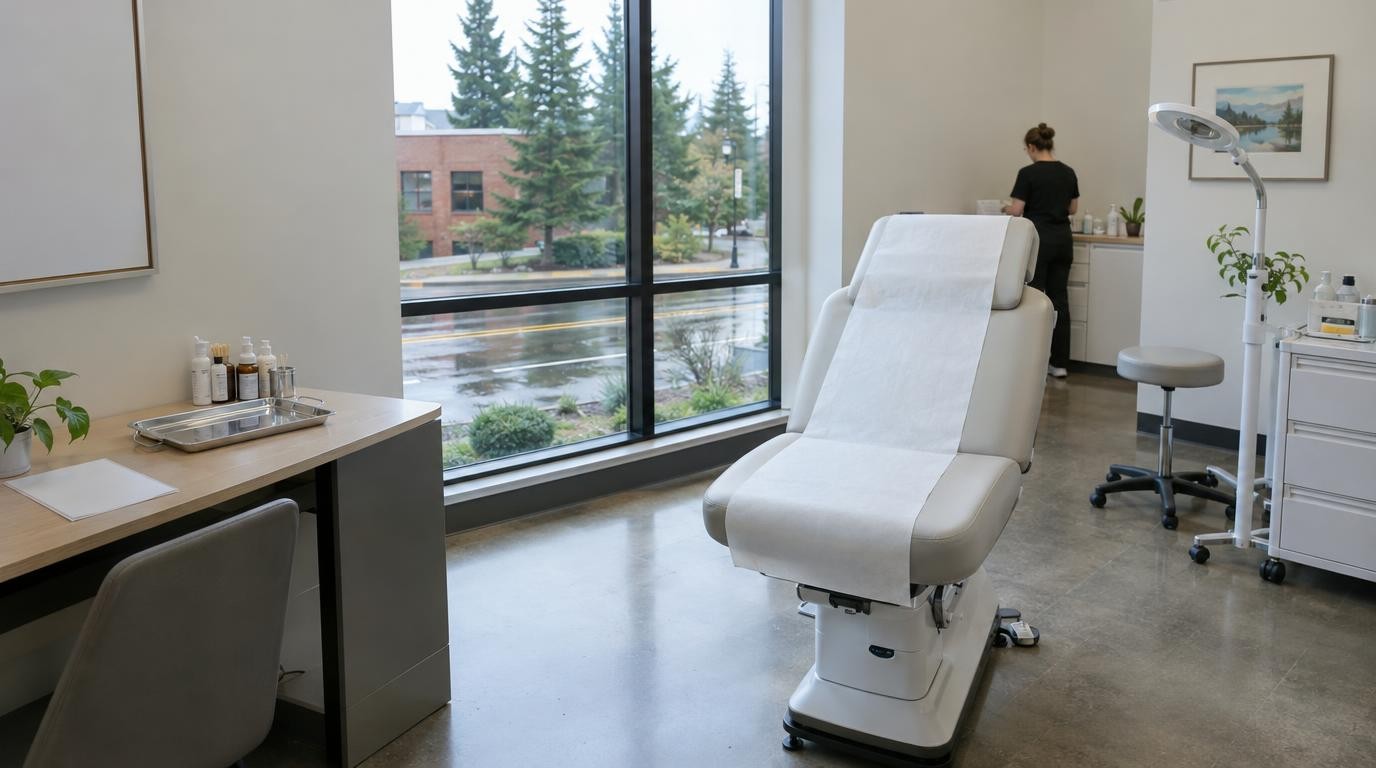
We begin with a pretreatment skin test, then use topical numbing cream before injecting Bellafill into the selected areas. If more correction is needed, we may recommend a follow-up visit. We provide these appointments at Vip MediSpa in Portland, Oregon.
Why Is an Allergy Test Needed Before Bellafill?
Because Bellafill contains bovine collagen, a skin test helps identify a potential reaction before treatment. At Vip MediSpa, we arrange the test about a month before the injection appointment. The FDA-hosted Bellafill patient labeling says the test must be administered and evaluated before injection and that a positive result rules out treatment.
When Might a Follow-Up Injection Be Recommended?
A follow-up may be recommended when the initial treatment has not achieved the intended correction. Our usual appointment sequence is:
- Before treatment, we check the skin-test result and review the areas selected for injection.
- We apply topical numbing cream before injections; at Vip MediSpa, the injection visit takes approximately 15 to 20 minutes.
- If needed, return to Vip MediSpa for a follow-up treatment 3 to 6 weeks after the initial session.
When assessing a photo gallery, check whether the after image follows the initial injection alone or includes a follow-up session.
What Is Recovery Like After Bellafill Injections?
An immediate Bellafill after photo may show post-injection changes rather than a settled result.
How Long Can Swelling, Bruising, or Sensitivity Last?
At Vip MediSpa, swelling or bruising may last 3 to 10 days, and sensitivity may last up to 24 hours. Check whether an after photo was taken while those effects were still present. If swelling or bruising worsens or lasts longer than expected, contact our team. Follow the individualized aftercare instructions given at your treatment visit, and do not judge a lasting result from early puffiness alone.
What Are Bellafill’s Risks, and Who Should Avoid It?
Injection-site swelling, bruising, redness, or discomfort can occur after Bellafill. Lumps, delayed inflammation, and allergic reactions are also possible. The FDA Bellafill Instructions for Use reports that three skin-tested subjects (1.7%) had a positive result and were excluded before injection; that screening figure is not the frequency of allergic or injection-site reactions after treatment. Accidental injection into a blood vessel can cause serious tissue or vision injury. Do not receive Bellafill after a positive skin test or if you have a known allergy to bovine collagen or lidocaine, a history of anaphylaxis or multiple severe allergies, a bleeding disorder, or a tendency to develop keloids or hypertrophic scars. Review your allergy and medical history with your own clinician before injection.
If you have active acne, we recommend assessing and managing it before treating existing scars. We will assess an inflamed or infected proposed injection site and postpone Bellafill there until your clinician determines it has healed.
Does Bellafill Dissolve?
No. The PMMA microspheres remain in tissue, and the enzyme used to dissolve hyaluronic acid filler does not dissolve Bellafill. Correcting an unwanted placement or persistent lump may be difficult. The FDA Instructions for Use advises patients to report adverse texture changes or other possible problems promptly. Seek urgent medical care for severe or increasing pain, concerning skin-color changes, vision changes, or signs of a severe allergic reaction such as difficulty breathing.
Why Do Allergy History and Skin-Test Results Matter?
A skin test does not rule out every allergy concern: Bellafill contains lidocaine as well as bovine collagen. Bellafill patient labeling also rules out treatment after two skin tests that show no local reaction but cause systemic reactions.
How Does Bellafill Compare With Other Options for Acne Scars?
There is no single strongest treatment for every acne scar. Bellafill’s approved use addresses moderate to severe, atrophic, distensible cheek scars in patients over age 21; other scar patterns may call for a different approach.
What Is the Strongest Treatment for Acne Scars?
The answer depends on scar shape, depth, location, and whether the scar can be stretched. The FDA Instructions for Use says Bellafill’s safety and effectiveness have not been established for non-distensible atrophic scars and that ice-pick or sinus-tract scars were not studied. A systematic review of synthetic dermal fillers for acne scars found that much of the available research was low quality, which limits broad claims that one filler is best for every scar.
What Do Koreans Use for Acne Scars?
There is no single acne-scar treatment to attribute to Korean patients or clinics. The Cleveland Clinic’s acne-scar treatment overview describes options including fillers, microneedling, chemical peels, and laser treatment, but does not establish a Korea-specific standard of care. We assess the scar before recommending an approach.
How Is Bellafill Different From Hyaluronic Acid Filler?
For a depressed scar, compare these injectable options by their indications and reversibility:
| Filler | Potential role for acne scars | Can an enzyme dissolve it? |
|---|---|---|
| Bellafill | FDA-approved for moderate to severe, atrophic, distensible cheek acne scars in patients over age 21. | No. Its PMMA microspheres remain in tissue. |
| Hyaluronic acid filler | May add volume to a depressed scar, but use for acne scars is off-label, even if the specific product is approved for other uses. | Yes. An appropriate enzyme can dissolve hyaluronic acid filler when clinically indicated. |
Our cheek filler before-and-after guide offers additional context for comparing photos of volume changes, though cheek-volume images should not be treated as evidence for Bellafill’s approved acne-scar use.
Frequently Asked Questions
Can I have laser treatment or a chemical peel after Bellafill?
Yes, but laser treatments, chemical peels, and other procedures that trigger a skin response may cause inflammation at the Bellafill implant site. The FDA Bellafill Instructions for Use does not specify a universally safe waiting interval. Its warning also applies if Bellafill is injected before skin has fully healed from such a procedure.
Can I get Bellafill if I take blood thinners?
Possibly, but do not stop a prescribed blood thinner on your own. The FDA Bellafill Instructions for Use notes that injection-site bruising or bleeding may occur and that Bellafill has not been studied in patients treated with thrombolytics, anticoagulants, or platelet-aggregation inhibitors within the preceding three weeks.
Can I get Bellafill while pregnant or breastfeeding?
Bellafill’s safety during pregnancy or breastfeeding has not been established, according to the FDA Bellafill Instructions for Use. If you are pregnant, breastfeeding, or planning a pregnancy, do not interpret that lack of safety data as evidence that this elective treatment is safe for you.
How many Bellafill sessions does it usually take?
One or two sessions may be needed for optimal correction, according to the American Society for Dermatologic Surgery. At Vip MediSpa, we assess the initial result and, if needed, schedule a follow-up treatment three to six weeks later. The number of sessions depends on the area treated and the correction you and your injector are aiming for.
What percentage of people see acne scar improvement with Bellafill?
In the randomized, saline-controlled acne-scar trial reported in the FDA Bellafill Instructions for Use, 56 of 87 Bellafill-treated participants (64.4%) versus 15 of 46 saline-treated participants (32.6%) met the six-month response definition: at least half of their treated scars improved by two or more points on a four-point scale. These participant-level figures do not describe the percentage of individual scars that improved or predict your result.
Should I avoid sun after Bellafill injections?
Yes. The FDA Bellafill Instructions for Use says to minimize exposure to excessive sun, UV lamps, and extreme cold at least until initial swelling and redness resolve. Follow the individualized aftercare instructions we provide at Vip MediSpa.
How Can You Decide Whether Bellafill Photos Match Your Goals?
Decide whether Bellafill photos are relevant by matching the treated concern, confirming the indication, and checking when the after image was taken. Ask how many sessions produced the pictured change and whether another treatment was involved. Then weigh the likely benefit against the risks, limitations, and alternatives for your own smile lines or cheek scars.
- Is the proposed treatment area within Bellafill’s FDA-listed indications, or would treatment be off-label?
- Do the photos show the same concern as yours, with comparable lighting and expression?
- Does each caption identify the follow-up interval and number of treatment sessions?
- What risks and alternative approaches matter for your particular fold or scar?
If you are coming from Lake Oswego, Oregon, Vip MediSpa welcomes you to consult with our team in Portland, Oregon. We can assess the area you want to treat, explain whether Bellafill fits your goals, and help you interpret before-and-after photos without treating them as a guarantee.
This information is general and is not medical advice. Talk to a licensed clinician about your own situation before making a treatment decision.