


Last updated: October 7, 2026
Lipo gynecomastia removes chest fat, but liposuction alone is enough only when the remaining glandular tissue and skin will allow a satisfactory contour. If firm breast tissue or loose skin contributes substantially to an enlarged chest, male breast reduction at Vip MediSpa in Portland, Oregon may also require tissue or skin removal.
Can lipo remove gynecomastia?
Liposuction can reduce an enlarged chest when excess fat is the main concern and the skin can settle after fat removal. Liposuction does not reliably remove firm glandular breast tissue or correct loose skin. The distinction matters because an enlarged chest may contain fat, glandular tissue, loose skin or a combination of all three.
How is chest fat different from glandular breast tissue?
Chest enlargement caused by fat without excess glandular tissue is called pseudogynecomastia; true gynecomastia involves enlarged glandular breast tissue. Fat can be removed with suction, while firmer glandular tissue beneath and around the nipple may need surgical excision. We examine your chest to determine how much fat, glandular tissue and skin contribute to its shape. The American Society of Plastic Surgeons identifies these as separate components of an enlarged male chest.
Weight loss may reduce chest fat, but it does not reliably remove glandular breast tissue.
What shrinks gynecomastia?
Pubertal gynecomastia often resolves without surgery; treating an underlying disease or changing an implicated medicine under medical guidance may resolve other cases. Johns Hopkins Medicine describes these approaches, but you should not stop a prescribed medicine without medical advice. For selected cases of persistent enlargement with pain or discomfort, a clinician may consider hormone-directed medication, as Mayo Clinic notes. Surgery may be an option for tissue that persists.
How do surgeons choose between liposuction and gland removal?
Based on the examination, liposuction alone may suit a predominantly fatty chest with skin that can settle well. Firm tissue beneath the nipple or excess skin may make glandular excision, skin removal or a combined operation more appropriate.
What did the 2025 study find about liposuction alone?
A 2025 comparative study in the Indian Journal of Plastic Surgery found similar cosmetic evaluations after liposuction alone and liposuction with glandular excision, but redo surgery was more common after liposuction alone. The 2025 Indian Journal of Plastic Surgery study assessed 32 breasts over a 6-month postoperative follow-up. Its small size means the findings do not establish that every patient can avoid excision.
The study reported the following treatment groups and observed complications.
| Treatment in the 2025 study | Breasts assessed | Reported findings |
|---|---|---|
| Liposuction alone | 17 | Bruising, two hematomas and one redo surgery for “puffy nipples” |
| Liposuction with glandular excision | 15 | Four crater deformities, plus one case each of superficial skin necrosis, hematoma and seroma |
Both approaches had trade-offs. The useful question for an individual patient is whether liposuction will leave tissue that still affects the chest contour.
When might liposuction and gland removal be combined?
A combined plan may help when suction can shape the fatty areas but firm tissue also needs removal. The American Society of Plastic Surgeons’ procedure guidance explains that primarily fatty enlargement may be treated with liposuction alone, while glandular tissue or excess skin can require excision. We may combine chest liposuction with male breast reduction to refine the surrounding contour. Excision generally requires larger incisions than liposuction. This overview of liposuction versus excision for gynecomastia offers more context on the two approaches.
Who is a good candidate for gynecomastia liposuction?
A good candidate for gynecomastia liposuction generally has a small to moderate amount of excess chest fat, little or no loose skin, good overall health and realistic expectations. At Vip MediSpa, the examination matters more than a stage label: substantial glandular tissue or skin looseness can change the recommended plan.

Under our grading approach, Grade I means a small amount of enlargement without excess skin, and Grade IIa means moderate enlargement without excess skin. Patients in these groups may be candidates for liposuction. Grade IIb includes some loose skin, while Grade III includes significant enlargement and excess skin; these groups typically need removal of fat, glandular tissue and/or skin. These grades guide a consultation rather than determine treatment on their own.
We also advise patients to be near their ideal weight for at least one year before considering male breast reduction. Extra weight may change the extent of surgery needed.
What is stage 4 gynecomastia?
“Stage 4” is not a label in Vip MediSpa’s grading system. Our service uses four categories running from Grade I through Grade III, with Grade II divided into IIa and IIb. In our system, the highest category is Grade III, which includes significant enlargement and excess skin; another system’s “stage 4” cannot be translated into our grades without knowing its criteria.
Can Ozempic cure gynecomastia?
No. Ozempic is not approved to treat gynecomastia; using it for that purpose would be off-label. Weight loss may reduce chest fat, but it does not reliably remove glandular breast tissue. An article on the American Society of Plastic Surgeons’ site discusses Ozempic in the context of weight management, not as a treatment for gynecomastia.
What happens during SmartLipo for gynecomastia in Portland?
At Vip MediSpa in Portland, Oregon, we use laser-assisted SmartLipo to remove selected chest fat through small incisions with a thin suction tube called a cannula. The surgeon determines whether liposuction alone can address the enlargement or whether additional tissue removal is indicated. Anesthesia and the full treatment plan are individualized.
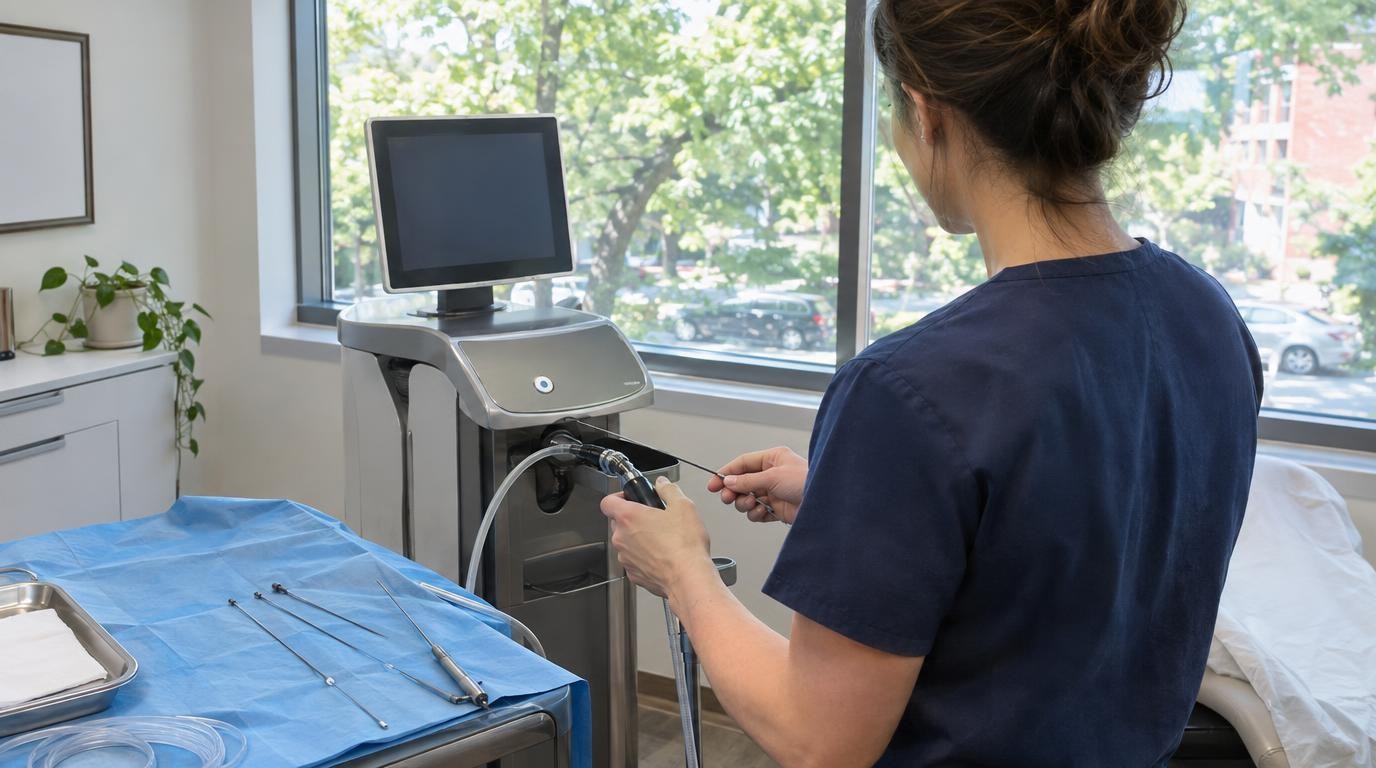
The cannula removes fat to reshape the chest, but a plan that also calls for glandular or skin removal involves additional surgical steps. If you are comparing methods, our SmartLipo and traditional liposuction comparison explains the laser-assisted approach; the choice for gynecomastia still turns on the tissue found during examination.
What should you tell the surgeon before treatment?
Bring a complete medical history, including health conditions, medicines and supplements you take regularly. The consultation includes a physical examination and a review of factors that may affect surgical fitness, the technique and anesthesia. Sharing those details helps the surgeon plan treatment and give you preoperative instructions that fit your circumstances.
How long does recovery take after chest liposuction?
At Vip MediSpa, we advise that overall recovery from gynecomastia surgery can take several months. Tenderness, swelling and bruising may occur. The precise course depends on whether treatment involves liposuction alone or additional tissue removal and on individual healing.
How much time should you plan away from work or school?
At Vip MediSpa, plan five to 14 days away from work or school for initial rest, not as a sign that swelling has resolved or recovery is complete. Excision uses larger incisions than liposuction alone and may affect your activity restrictions. Follow your postoperative instructions and attend scheduled follow-ups so we can assess healing. For more on initial rest and longer healing, see this gynecomastia surgery recovery guide.
Which incision changes should you report to the surgeon?
Contact the care team if an incision becomes red or begins oozing. Report increasing warmth, worsening pain or swelling, fever, or concerning drainage rather than waiting for a scheduled follow-up.
What chest contour can you expect from liposuction alone?
Liposuction alone can improve chest contour when removable fat is the main source of fullness and the skin can settle after treatment. Liposuction is not weight-loss surgery and cannot reliably tighten loose chest skin or remove significant firm glandular tissue. Your contour may continue changing over several months as swelling resolves. Improvement can be long-lasting when your weight stays stable and contributing conditions or medicines are addressed, but it is not guaranteed to be permanent: later weight changes or an unresolved underlying cause can lead to renewed enlargement.
An appropriately selected patient may see a flatter-looking chest, but no particular shape or scar appearance can be guaranteed. Small incisions still heal as scars. If scar appearance is a concern, our discussion of raised scars after cosmetic surgery provides context for that conversation.
What are the risks, and when is liposuction not suitable?
Surgical risks include infection, a blood collection (hematoma), a fluid collection (seroma) and an uneven chest contour. Liposuction alone is a poor fit under our approach when loose skin remains or significant glandular tissue needs removal. Medical conditions, medications and overall surgical fitness require individual evaluation before treatment.
Following preoperative instructions cannot eliminate surgical risks. Seek urgent medical care for chest pain, trouble breathing, heavy bleeding or rapidly worsening swelling. Discuss your health conditions, medicines and personal surgical risks with your own licensed clinician before deciding on a procedure.
Frequently Asked Questions
Do I need an ultrasound before gynecomastia liposuction?
Not everyone needs an ultrasound before gynecomastia liposuction. A physical exam can identify the type of enlargement in some cases; ultrasound may help when the findings need further assessment.
Can gynecomastia happen on just one side?
Yes, gynecomastia can affect one breast or both. If one side has a lump or looks enlarged, have a clinician examine it rather than assuming it is fat or gynecomastia. An article on the American Society of Plastic Surgeons’ site recommends a breast exam to confirm gynecomastia and assess any suspicion of male breast cancer before cosmetic treatment.
Will gynecomastia surgery make my areolas smaller or move my nipples?
It can, but only if your treatment plan includes those steps. Liposuction alone removes fat; reducing an enlarged areola or repositioning a nipple requires surgical excision. A surgeon assesses skin, breast tissue and nipple position before recommending either change, so neither is an automatic part of male breast reduction.
Where are the incisions for gynecomastia liposuction?
Gynecomastia liposuction uses small chest incisions, which may be placed along part of the areola’s edge or in the armpit, depending on the technique and your needs. If glandular tissue or skin also needs removal, the incisions may differ. Excision incisions are typically placed around the edge of the areola or in a natural chest crease; their length depends on the tissue that needs removal.
What anesthesia is used for gynecomastia liposuction?
Gynecomastia liposuction is typically performed with local anesthesia and sedation or with general anesthesia. We choose the option based on your health and the scope of the procedure.
How should I prepare for gynecomastia surgery at Vip MediSpa?
Before gynecomastia surgery at Vip MediSpa, we advise avoiding smoking, alcohol, tanning and sun exposure for 14 days and arranging a ride plus someone to stay with you for the first one to two days afterward. Tell us about all medicines and supplements you take. We may ask you to stop certain medicines for 10 days before surgery; coordinate any changes with your primary care physician. If we prescribe medicines before surgery, have them filled and available at home on procedure day. Follow the individualized instructions we give you for your procedure.
What should I ask when choosing a gynecomastia surgeon?
Ask about the surgeon’s training in liposuction and specific experience performing male breast reduction, priorities noted by the American Board of Cosmetic Surgery. Ask which technique they recommend for you and how they handle complications or a possible revision.
When should you discuss male breast reduction with a surgeon?
Discuss male breast reduction when an enlarged chest persists and you want to know whether fat, glandular tissue, loose skin or a combination is responsible. A consultation can establish whether liposuction alone is reasonable, whether excision belongs in the plan and what recovery and risks apply to your circumstances.
To discuss an approach tailored to your chest and health in Portland, Oregon, contact Vip MediSpa for a gynecomastia consultation.
This information is general and is not medical advice. Talk to a licensed clinician about your own situation before making a treatment decision.






