

Last updated: November 12, 2026
Radiesse is an injectable dermal filler containing synthetic calcium hydroxylapatite (CaHA) microspheres—a mineral-like material similar to the mineral in bones and teeth—not hyaluronic acid. It adds volume when injected and supports a gradual collagen response. At Vip MediSpa in Portland, Oregon, we offer Radiesse treatment as an option for facial lines and volume concerns.
What Is Radiesse?
Radiesse’s manufactured CaHA microspheres are suspended in a water-based gel; they are not taken from bones or teeth. The U.S. Radiesse instructions for use identify sterile water, glycerin, and sodium carboxymethylcellulose as components of that gel carrier.
What Is Radiesse Face Treatment Used For?
Radiesse face treatment is used for selected facial wrinkles, folds, and volume concerns. The U.S. Radiesse labeling includes correction of moderate-to-severe facial wrinkles and folds, such as nasolabial folds, as well as signs of facial fat loss associated with HIV. The approved facial-fold indication does not cover every cosmetic volume or contouring goal.
Treating cosmetic cheek volume loss or augmenting the chin with standard Radiesse is off-label; moderate-to-severe marionette lines can fall within its facial-fold indication. The jawline-contouring indication applies to Radiesse (+), the lidocaine-containing formulation; jawline contouring with standard Radiesse is off-label. Radiesse also has a separate indication for volume loss on the backs of the hands, according to the U.S. hand-treatment instructions for use.
The FDA’s Radiesse safety and effectiveness summary also identifies an approved use for correcting wrinkles on the décolleté, or upper chest. For that use, Radiesse is diluted 1:2 with sterile saline and injected using a flexible cannula—a different preparation and administration technique from facial-fold or hand treatment.
What Type of Filler Is Best for the Chin?
For a firm, immediately defined chin contour, CaHA may be worth discussing: the American Society of Plastic Surgeons’ discussion of biostimulatory fillers describes Radiesse as suited to structural chin definition. Chin augmentation with standard Radiesse is off-label. If the option to dissolve filler matters more to you, a hyaluronic acid filler may be a better fit; Cleveland Clinic’s dermal-filler guide describes these fillers as commonly used for chin augmentation and reversible. Neither type is best for every chin: your anatomy, desired contour, and planned placement matter. Our guide to dermal fillers for a weak chin profile explores how chin treatment relates to the rest of the lower face.
How Does Radiesse Work After Injection?
Radiesse works in an immediate volumizing phase and a slower tissue-response phase. The injected gel and CaHA microspheres add volume at placement; as the carrier is absorbed and the CaHA is gradually metabolized, the microspheres act as a scaffold associated with new collagen formation. The extent of that response varies between individuals.
A 2023 narrative review in Aesthetic Surgery Journal describes increases in collagen and other structural components associated with Radiesse. That evidence does not predict how much collagen an individual patient will produce or guarantee a visible change.
Is Radiesse a Biostimulator?
Yes. A biostimulator prompts the body to produce structural tissue, including collagen, in response to the injected material. Radiesse is also a volumizing filler, so calling it a biostimulator does not mean you must wait for new collagen to see any effect. If you are comparing treatment approaches, our guide to Radiesse and Sculptra results timelines explains how their timing differs.
Who May Be a Good Candidate for Radiesse?
A potential Radiesse candidate is an adult seeking treatment for suitable facial folds, volume loss, or a defined structural contour goal. Candidacy depends on the treatment area, skin condition, medical history, and whether a structural filler suits the planned placement. Radiesse is not a nonsurgical facelift or a general correction for loose body skin.
Identifying whether your main concern is a fold, lost volume, or skin laxity helps us avoid treating the wrong problem. For example, adding volume may soften a smile line, but it does not remove excess skin. Skin thickness and the way your face moves also help guide the treatment plan.
What Happens During a Radiesse Procedure?
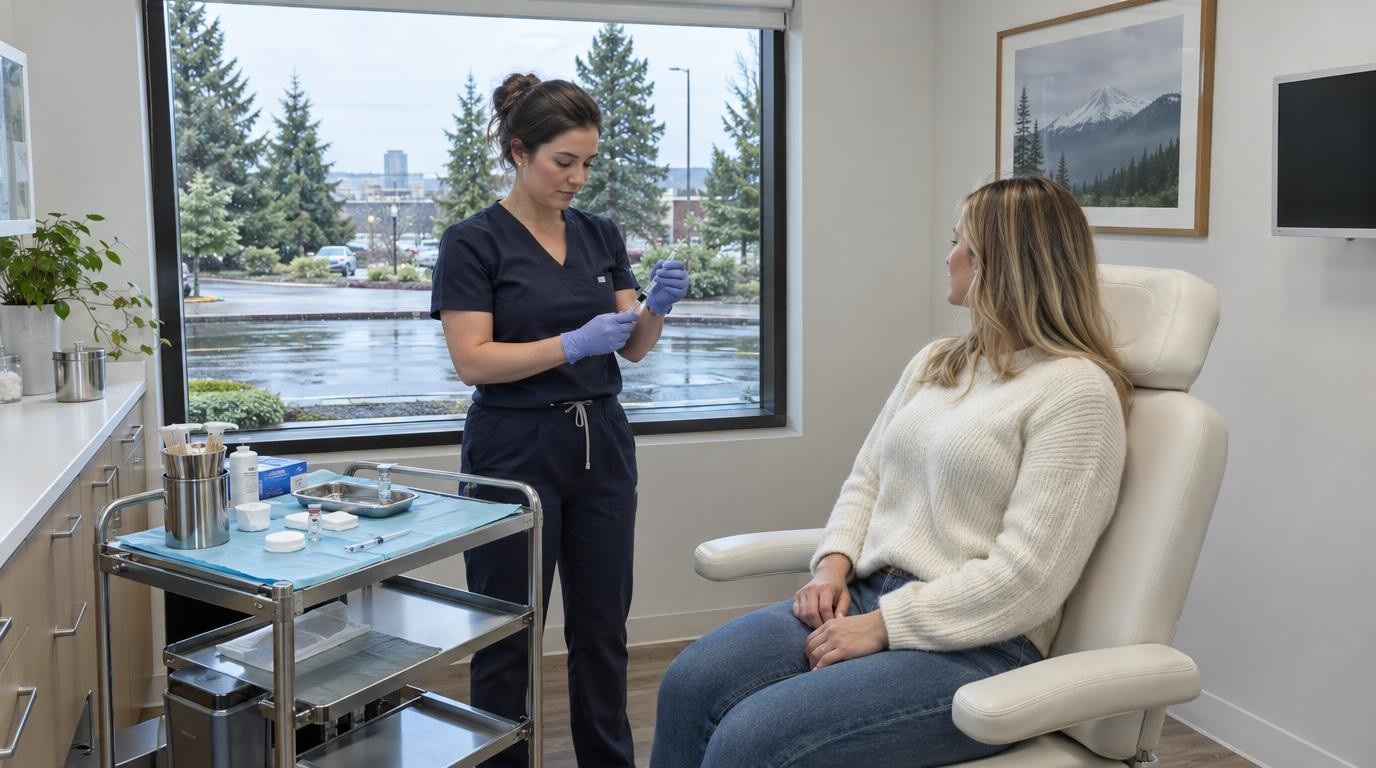
A Radiesse visit generally follows these steps: For facial wrinkles and folds, the U.S. Radiesse instructions for use describe injection with a 25- to 27-gauge needle. The qualified injector selects the technique and treatment plan for the individual patient.
- Assessment: The injector reviews the area, desired contour, medical history, and whether Radiesse fits the goal.
- Preparation: The treatment site is prepared before injection.
- Injection: The injector places the filler using a technique appropriate to the selected area.
- Evaluation: The injector checks the immediate appearance and gives site-specific aftercare instructions.

What Is Recovery Like After Radiesse Injections?
Most people can return to ordinary, nonstrenuous activities the day of a Radiesse injection, though visible swelling may make you prefer to wait. Redness and swelling often improve over the next few days; bruising may take a week or longer to fade. Follow your injector’s site-specific advice about exercise and pressure on the treated area rather than massaging it on your own. Contact us if swelling or tenderness worsens instead of improving or lasts longer than the timeframe discussed at your visit.
When Will Radiesse Results Appear, and How Long Can They Last?
Radiesse can add visible volume at injection, while collagen-related changes develop over subsequent months. Longevity varies with the treatment area and the individual. With Radiesse, results can last at least a year in some individuals, but that duration is not guaranteed.
| Source | What it reports | What it means for patients |
|---|---|---|
| Vip MediSpa | Results lasting at least a year in some individuals | Individual results may differ. |
| 2008 review in Clinical Interventions in Aging | An average lasting result of 12 to 18 months | A reported range, not a guaranteed duration for a particular area or patient. |
For a closer look at how the immediate and later changes differ, see our guide to Radiesse results over time.
What Are Radiesse’s Risks, and Who Should Avoid It?
Radiesse risks include common injection-site swelling, redness, tenderness, and bruising, as well as possible lumps or nodules. Rare accidental injection into a blood vessel can block blood flow and cause skin damage, blindness, or stroke. Sudden severe or increasing pain, pale or mottled skin, vision changes, sudden weakness, facial droop, or difficulty speaking after injection may signal an emergency. Call 911 immediately rather than waiting for routine follow-up.
The U.S. labeling identifies severe allergy history and known hypersensitivity to product components as contraindications; hand-treatment labeling also lists bleeding disorders. Treatment should be deferred when active infection or inflammation is present at or near the site. Safety during pregnancy or breastfeeding has not been established. Discuss your medical history and these risks with your own clinician before treatment.
Can Radiesse Be Dissolved?
No. Hyaluronidase can be used to treat many hyaluronic acid fillers, but it does not dissolve CaHA in Radiesse. A lump, unexpected result, or suspected complication therefore needs professional assessment rather than an assumption that the filler can simply be reversed.
How Does Radiesse Compare With Hyaluronic Acid Fillers?
Radiesse and hyaluronic acid fillers differ in composition, how their results develop, and reversibility:
| Consideration | Radiesse | Hyaluronic acid fillers |
|---|---|---|
| Material | CaHA microspheres in a gel | Hyaluronic acid gel |
| Results | Immediate volume, with a possible later collagen response | Volume after injection; duration depends on the product and placement |
| Reversibility | No dissolving agent | Many can be treated with hyaluronidase |
Neither category is universally better. The relevant comparison is whether an available product suits your treatment area, desired contour, and medical history. For more on that contour goal, see Radiesse for jawline definition.
What Other Options Might Fit Your Concern?
The FDA’s Radiesse approval summary lists other fillers, chemical peels, laser resurfacing, dermabrasion, botulinum toxin injections, surgery, and no treatment as alternatives for relevant facial concerns. If your concern is a fine surface line or skin texture, we may discuss a peel or laser resurfacing instead of adding filler volume. For lines caused by facial movement, a neuromodulator such as Botox or Dysport may fit better. Deeper folds or lost volume may call for a hyaluronic acid filler or another option such as Sculptra, while pronounced loose skin may warrant a discussion of surgery. These approaches are not interchangeable; the right choice depends on what is causing the change you want to address.
Frequently Asked Questions
Do I need an allergy skin test before Radiesse?
No, a routine allergy skin test is not required before Radiesse injections. You still need to tell your injector about severe allergies or reactions to product ingredients. FDA labeling identifies severe allergy history and known hypersensitivity to Radiesse components as reasons not to receive treatment.
Does Radiesse contain animal products?
No. Radiesse is non-animal based and free from animal protein, according to the FDA’s hand-treatment patient information. It contains synthetic calcium hydroxylapatite microspheres in a water-based gel. If you have a known allergy to any ingredient, tell your injector before treatment; being animal-free does not rule out an allergic reaction.
Can Radiesse make the veins on the backs of my hands less visible?
Yes. Radiesse is indicated to add volume to the backs of the hands, which can make veins and tendons less visible when fullness has been lost. It does not remove the veins or correct the underlying cause of volume loss. The FDA’s patient information specifies the backs of the hands, not the palms, wrists, or fingers.
Will I need more than one Radiesse treatment?
Possibly. One facial treatment can provide substantial improvement, but a touch-up or later maintenance treatment may be needed. For the backs of the hands, the FDA’s patient information describes a possible touch-up about 2 weeks to 1 month after the first injection.
Can I have a laser treatment or chemical peel after Radiesse?
Possibly. Laser treatments and chemical peels after Radiesse can cause swelling at the implant site. Injecting Radiesse before the skin has healed from a laser treatment or peel can also cause swelling.
Will Radiesse show up on an X-ray or CT scan?
It can. Radiesse contains calcium hydroxylapatite particles that are radiopaque, meaning they can appear on X-rays and CT scans. The FDA instructions for use discuss radiographic evaluation of treated patients. Tell the clinician interpreting your scan where and when you received filler so they have that context.
Can lidocaine be mixed with Radiesse for injections?
Yes, mixing Radiesse with lidocaine has been studied for nasolabial folds, the creases between the nose and mouth. The FDA instructions for use state that the safety and effectiveness study of this mixture was conducted only for that area.
How Can You Decide Whether Radiesse Is Right for You in Portland?
Deciding whether Radiesse is right for you starts with the area you want treated, the timing of the result you expect, and your comfort with a non-hyaluronic acid filler. Your medical history and the exact product proposed matter too.
- Is your main concern a facial fold, lost volume, or contour definition?
- Do you understand the difference between immediate volume and changes that develop later?
- What aftercare or follow-up might treatment of your chosen area require?
- Which health conditions, allergies, or prior treatments should the injector review?
- What product and treatment area does the proposed plan cover?
If you are considering Radiesse in Portland, Oregon, contact Vip MediSpa for an individualized consultation. We can assess your goals and help you understand whether Radiesse or another option we offer better fits your situation, without promising a particular outcome.
This information is general and is not medical advice. Talk to a licensed clinician about your own situation before making a treatment decision.






