Last updated: November 16, 2026
Ultherapy before-and-after photos may show a subtly lifted brow or firmer-looking skin under the chin and along the neck, but they should not suggest a surgical facelift result. At VIP MediSpa, we offer Ultherapy Uplifting Ultrasound as a noninvasive option for adults who want to address skin laxity without surgery.
What do Ultherapy before-and-after photos actually show?
Ultherapy before-and-after photos may show modest lifting around the brow or a firmer-looking chin and neck. The change is usually less dramatic than the result of surgery, particularly when someone has pronounced jowls or substantial loose skin. A useful comparison shows the same treatment area clearly and allows enough time for results to develop.
What changes might appear around the brow, chin, jawline, and neck?
A brow may look slightly more lifted, while the skin beneath the chin or along the neck may appear tighter. In studies summarized by the 2023 systematic review of microfocused ultrasound for facial skin tightening, the submental (under-chin) area decreased by 26–45 mm² on lateral photographs; that measured range cannot predict an individual’s visible result. A clearer jawline can be a welcome visual effect, but Ultherapy is not a reliable way to remove pronounced jowls. In clinical practice, the distinction between early laxity and excess skin matters more than a dramatic gallery image.
Can Ultherapy help with turkey neck?
Ultherapy may improve the appearance of mild neck laxity, but “turkey neck” can involve loose skin, fat, underlying muscle, or a combination. The American Society of Plastic Surgeons explains that noninvasive tightening may produce subtle changes yet may not make a significant difference when excess skin or substantial laxity is present. When excess skin or marked laxity is the main concern, a surgical neck lift can produce a more substantial change; the right approach also depends on whether skin, fat, or muscle is causing the appearance.
How does Ultherapy tighten skin without surgery?
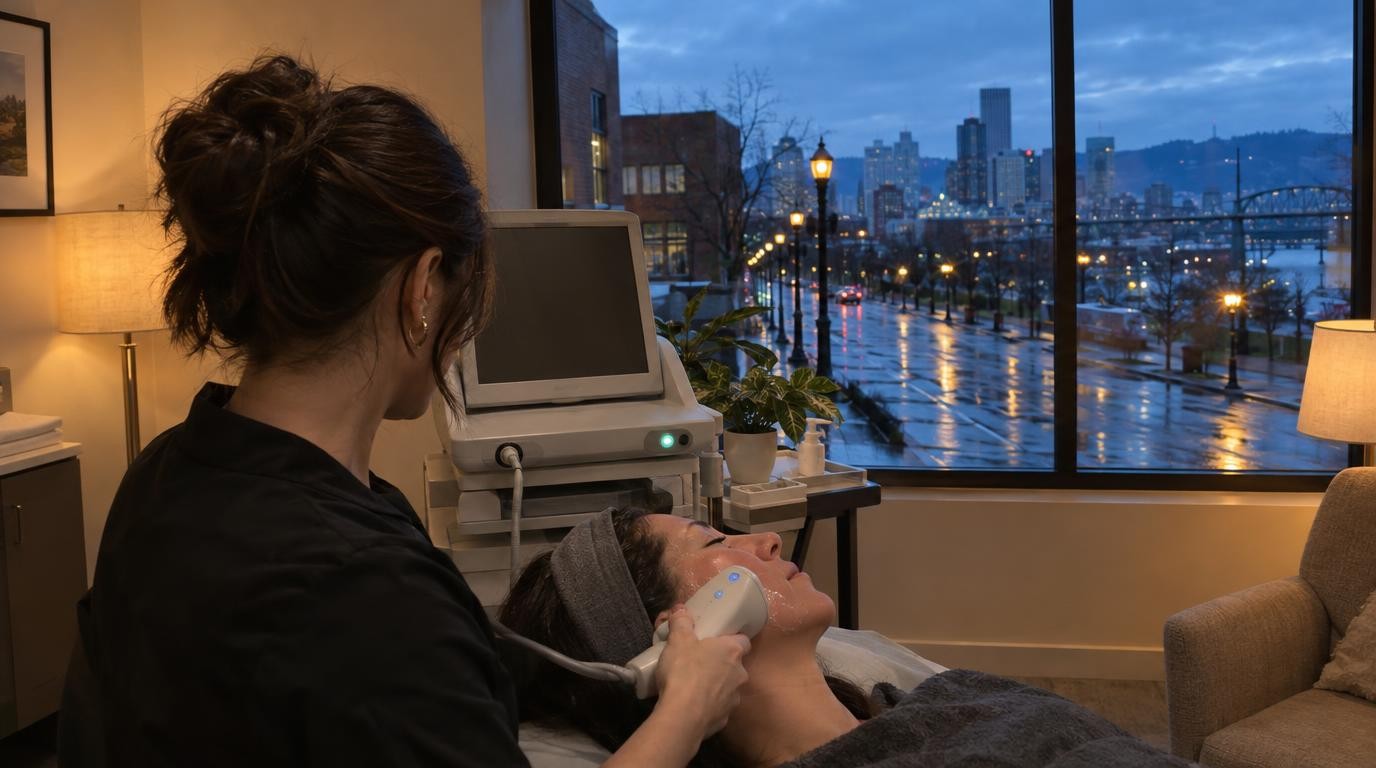
Ultherapy delivers focused ultrasound energy beneath intact skin, creating a tissue response that stimulates new collagen. The gradual collagen response can tighten and lift treated skin without incisions or surgical skin removal. Ultherapy skin tightening is therefore different from laser resurfacing, which addresses skin through a different treatment approach, and should not be presented as a facelift equivalent.
What does focused ultrasound do beneath the skin?
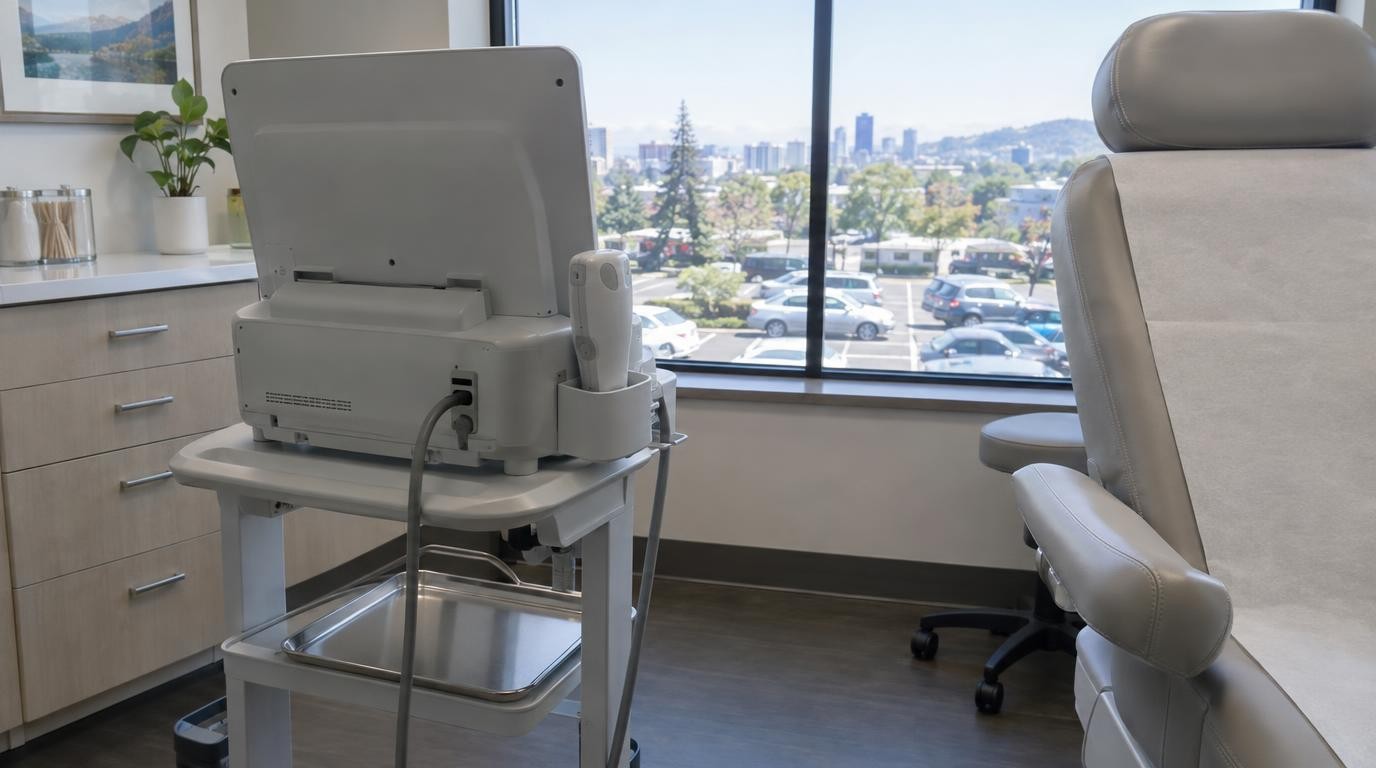
A handheld device directs ultrasound energy into targeted layers below the surface. Cleveland Clinic’s Ultherapy guidance explains that the energy heats targeted tissue and triggers a healing response that produces new collagen. Because that response develops gradually, the appearance immediately after treatment is not the final result. Readers comparing technologies can also review our Thermage versus Ultherapy comparison or learn how laser resurfacing differs from skin lifting.
When should you compare Ultherapy before-and-after results?
At VIP MediSpa, noticeable changes may appear over two to three months, with further improvement possible through six months. Photos taken three to six months after treatment offer a more useful comparison than treatment-day images.
What do patients report at three months and one year?
The 2023 systematic review of microfocused ultrasound for facial skin tightening found that patient-reported improvements were mild and became more common over the follow-up period. Its pooled patient ratings and investigator ratings answer different questions: one reflects what patients reported seeing, while the other reflects clinicians’ assessments. Neither predicts an individual patient’s result.
The 2023 review reported these pooled findings:
| Assessment | Patients assessed | Reported improvement |
|---|---|---|
| Patient ratings in the 2023 systematic review | 81 | 42% at 90 days; 53% at 360 days |
| Investigator ratings in the 2023 systematic review | 337 | 92% at day 90 |
The review included studies using different settings and treatment protocols, and all included studies involved female patients. Those limitations matter when applying the pooled findings to a particular person or treatment plan.
Why can photos taken right after treatment be misleading?
Early swelling or redness can temporarily change how the skin looks, while collagen-related lifting has not yet fully developed. Cleveland Clinic notes that full results may take three to six months to become visible, even if someone notices an earlier change. A treatment-day photo could therefore overstate an immediate lift or understate the eventual result. For another explanation of comparison timing, see this Ultherapy before-and-after timeline.
How can you judge whether Ultherapy photos are a fair comparison?
A fair Ultherapy photo comparison shows when each image was taken, uses similar photographic conditions, and discloses other treatments that could affect the appearance. Check pose, facial expression, lighting, distance, and framing before judging the change. A striking image shows what happened for one person; a comparable series is more helpful for setting expectations.
Were the photos taken under the same conditions?
Use this checklist when reviewing a gallery:
- Timing: Is the after photo labeled with the interval since treatment?
- Position: Are head angle, posture, and expression similar?
- Photography: Are lighting, camera distance, and framing consistent?
- Treatment area: Do the images clearly show the brow, under-chin area, or neck being evaluated?
A lowered chin can make neck skin look looser; a raised chin can make it look smoother. Consistent positioning helps separate that effect from a treatment-related change.
Did the patient have other treatments between photos?
Ask whether injectables, resurfacing, surgery, or another skin-tightening treatment occurred between the images. Those details do not make a photo unusable, but they change what can reasonably be attributed to Ultherapy. A single dramatic image cannot establish what most patients will see, especially when treatment history and photography conditions are unknown.
Who is most likely to benefit from Ultherapy?
Adults seeking modest improvement in mild to moderate brow, under-chin, or neck laxity are generally better candidates for Ultherapy than people seeking major skin removal. Existing laxity, skin quality, and individual collagen response affect how visible the result becomes. A suitable goal is a subtle lift without surgery, not a guaranteed change in facial shape.
What are the benefits of using Ultherapy on the face?
For an appropriate candidate, the main benefit is the possibility of gradual lifting without incisions or planned recovery time. The 2023 systematic review found evidence of brow and under-chin tightening, while concluding that microfocused ultrasound was most suited to mildly or moderately lax facial skin. The review also noted limited longer-term follow-up, so an attractive before-and-after result should not be treated as a promise about how long a personal result will remain visible.
When might loose skin need a different approach?
Substantial excess skin or pronounced jowling may respond poorly to noninvasive tightening. If you are weighing nonsurgical approaches, our Portland skin-tightening treatment comparison explains how treatment approaches differ without assuming that one suits everyone.
What happens during Ultherapy treatment and recovery?
An Ultherapy appointment begins with assessment and treatment planning, followed by application of focused ultrasound to the selected areas. At VIP MediSpa, treatment generally takes about 30 to 60 minutes. Multi-area appointments may take longer; Cleveland Clinic estimates that Ultherapy can take two to three hours, depending on how many areas are treated.
What does an Ultherapy appointment feel like?
You may feel warmth or tingling as the ultrasound energy is delivered, and the 2023 systematic review described microfocused ultrasound treatment as moderately painful. After preparing your skin, your provider places the handpiece against the treatment area according to the treatment plan. Cleveland Clinic says a topical numbing cream may be used for comfort, although it generally is not necessary.
Can you return to normal activities afterward?
Daily activities can generally resume after Ultherapy, though the treated area may temporarily look red or feel tender. “No planned downtime” does not mean an absence of side effects. Cleveland Clinic says slight redness may last up to an hour or so, while tenderness may last up to one month.
What are Ultherapy’s risks, and who should avoid treatment?
Ultherapy can cause temporary redness, swelling, tenderness, or altered sensation, and uncommon complications can occur. We review the condition of the treatment area, your medical history, and any implants to identify reasons to delay or avoid treatment.
What side effects can happen after Ultherapy?
The 2023 systematic review reported transient redness, sometimes with swelling. The review reported other adverse effects in 2% of patients, including altered sensation, bruising, stinging, burns near the jaw, skin markings, and contact dermatitis. That pooled figure does not establish an individual patient’s risk. Seek prompt medical care for a suspected burn, new facial weakness, or severe or worsening pain rather than waiting for a routine follow-up.
What health or skin concerns should you discuss beforehand?
An open wound or active infection in the planned treatment area means Ultherapy should wait until it has healed or cleared and your clinician confirms it is appropriate to proceed. Other active skin conditions and previous procedures need individual review. Tell our team about implanted electronic devices or metal implants: eligibility depends on the implant’s type and location relative to the planned treatment area and the Ultherapy device’s guidance. Excessive laxity and BMI above 30 are different from those safety screening issues: the 2023 systematic review identified them as relative contraindications because positive results declined as laxity and BMI increased, not as automatic reasons treatment must be withheld.
Is there anything better than Ultherapy for more pronounced sagging?
For substantial excess skin, surgery may achieve a change that Ultherapy cannot. The options differ in the concerns they address and the recovery they involve:
| Consideration | Ultherapy | Surgical facelift |
|---|---|---|
| Most suitable concern | Mild to moderate laxity | More pronounced sagging or substantial excess skin |
| Approach | Focused ultrasound stimulates a gradual tightening response | Surgery can remove or reposition tissue |
| Recovery | Usually no planned downtime | Requires an operation and recovery |
How does Ultherapy compare with a surgical facelift?
Ultherapy does not remove loose skin. Cleveland Clinic notes that it is not a replacement for a surgical facelift; the amount of laxity present matters more than whichever before-and-after photo looks most dramatic.
Frequently Asked Questions
How much of a brow lift has been measured after Ultherapy?
In a 2023 systematic review of microfocused ultrasound, studies measured brow lifts of 0.47 to 1.7 mm after treatment. That is a small physical change, not a prediction of how noticeable your own result will look.
How long do Ultherapy results last?
Ultherapy results can last up to a year with good at-home skin care, according to the American Board of Cosmetic Surgery. Skin continues to age, so the visible effect varies by person. A 2023 systematic review had no follow-up data beyond one year, so a longer duration cannot be promised.
Will I need more than one Ultherapy treatment?
Possibly. The American Board of Cosmetic Surgery notes that multiple nonsurgical tightening treatments may be needed to achieve a desired result and that periodic repeat treatment may help maintain it. There is no single repeat-treatment schedule that applies to everyone.
Can Ultherapy treat wrinkles on the upper chest?
Yes. Cleveland Clinic says Ultherapy can improve fine lines and wrinkles on the upper chest, also called the décolleté. An FDA clearance document reports that masked assessors found improvement in lines and wrinkles in 36 of 54 evaluable participants 180 days after one treatment. That study finding does not predict an individual result.
Can I wear makeup after Ultherapy?
Yes. Cleveland Clinic says you can wear makeup immediately after Ultherapy and resume your usual skin care routine. Some people have temporary redness, swelling, bruising, or tenderness, so follow any individual aftercare instructions from your treating clinician. Wearing makeup does not mean a visible lifting result will appear immediately.
Does a higher BMI affect Ultherapy results?
Possibly. A 2023 systematic review identified BMI above 30 as a relative contraindication because positive results declined as BMI increased. That does not automatically rule out treatment, but it may reduce the chance of a visible improvement.
Does Ultherapy work as well for men as for women?
It is not clear whether the published results apply equally to men. Every study in the 2023 systematic review of microfocused ultrasound for facial tightening involved female patients, and the authors called for research involving men. The review therefore cannot establish the results men should expect.
How can you decide whether Ultherapy is right for you?
Decide whether Ultherapy suits your goals by comparing appropriately timed photos from people with similar concerns and discussing the likely degree of change for your own skin. Ask what areas would be treated, whether other procedures contributed to gallery results, what treatment may feel like, and which personal factors affect safety or results.
What should you ask when reviewing results at a consultation?
- When were the before-and-after photos taken, and were pose and lighting consistent?
- Did the photographed patient have any other treatments between images?
- Is my brow, under-chin, jawline, or neck laxity likely to show a subtle improvement with ultrasound?
- What discomfort and temporary effects should I plan for, and what aspects of my medical history need review?
If you are coming from Fairview, Oregon, contact VIP MediSpa in Portland, Oregon at (503) 513-5533 for an individualized Ultherapy consultation. Dr. Max Grishkevich, MD, our founder and Medical Director, and our team can help you assess whether the likely degree of change matches your goals without promising a particular before-and-after outcome.
This information is general and is not medical advice. Talk to a licensed clinician about your own situation before making a treatment decision.
About the doctor at Vip MediSpa
Dr. Max Grishkevich, MD – Founder and Medical Director of VIP MediSpa; aesthetic physician and member of the American Academy of Cosmetic Surgery.