

Last updated: October 1, 2026
Thermage for skin tightening is a noninvasive radiofrequency treatment intended to improve the appearance of loose skin. Controlled heat reaches tissue below the surface and supports gradual collagen remodeling. If you are considering Thermage skin tightening, the most useful question is whether a modest change would meet your goals.
What Is Thermage for Skin Tightening, and How Does It Work?
Thermage delivers radiofrequency energy beneath the skin’s surface to encourage collagen remodeling and improve the appearance of mild skin laxity. The handpiece also cools the skin’s surface to help manage heat during treatment. Cooling is part of the process, but it does not eliminate every skin response or guarantee a particular degree of tightening.
How Does Radiofrequency Heat Support Collagen Remodeling?
Radiofrequency energy warms deeper skin tissue, where collagen helps provide structure. In its April 2023 explanation of radiofrequency skin tightening, Cleveland Clinic describes how controlled heat stimulates the body’s collagen response. That explanation supports the general mechanism behind radiofrequency treatment; it does not establish how much tightening an individual will get from Thermage.
Collagen remodeling takes time, so an immediate change in how skin looks or feels should not be treated as the final result. Thermage may appeal to someone who wants a non-surgical wrinkle treatment, but the goal is a subtler improvement in firmness and texture – not to remove wrinkles or reproduce the effect of surgery.
Which Skin Concerns and Areas Might Thermage Help?
Thermage may help improve the appearance of mild laxity around the jawline, neck, and eyes, as well as selected body areas when the device indications and treatment plan allow. The best fit depends on what causes the concern. Radiofrequency skin tightening can address loose-looking skin, but it cannot remove substantial excess skin or directly remove fat.
Can Thermage Help With Loose Jowls or Neck Skin?
For loose jowls, jawline sag, or early turkey neck, the likely goal is a more refined appearance rather than a dramatically reshaped jaw or neck. Crepey skin and fine lines may also be part of the discussion. A double chin caused mainly by fat, however, calls for a different assessment than neck skin laxity.
The same distinction matters elsewhere. Hooded eyes, deep smile lines, pronounced neck wrinkles, loose arms, and a sagging belly do not all respond alike to heat-based treatment. A provider can assess whether the skin itself is the main concern and whether a different approach would better serve your goal. For a broader look at the options, see our guide to skin-tightening treatments in Portland.
Who Might Be a Good Candidate for Thermage?
Adults with mild to moderate skin laxity who want a modest improvement without surgery may be good candidates for Thermage. A qualified provider should assess skin quality, treatment area, medical history, and expectations before recommending it. Good candidacy is not simply a matter of noticing wrinkles; the cause and extent of skin looseness matter.
In clinical practice, separating loose skin from underlying fat or more substantial tissue sagging helps set a useful treatment goal. Someone seeking a subtle improvement in crepey skin may have different options from someone hoping to eliminate turkey neck or substantially lift heavy jowls. Our team can discuss those differences without assuming that one device suits every face or body area. For a closer look at how Thermage and Ultherapy differ, read our comparison of their approaches to skin tightening.
Medical history is part of that conversation. People with pacemakers or other implanted electronic devices should not proceed when the device’s treatment guidance excludes them. If you are pregnant or have an active skin infection in the proposed area, tell your provider, as these are reasons to discuss postponing treatment and the next step with your own clinician. Your provider should review other relevant conditions and the applicable device guidance with you before treatment.
What Happens During a Thermage Treatment?
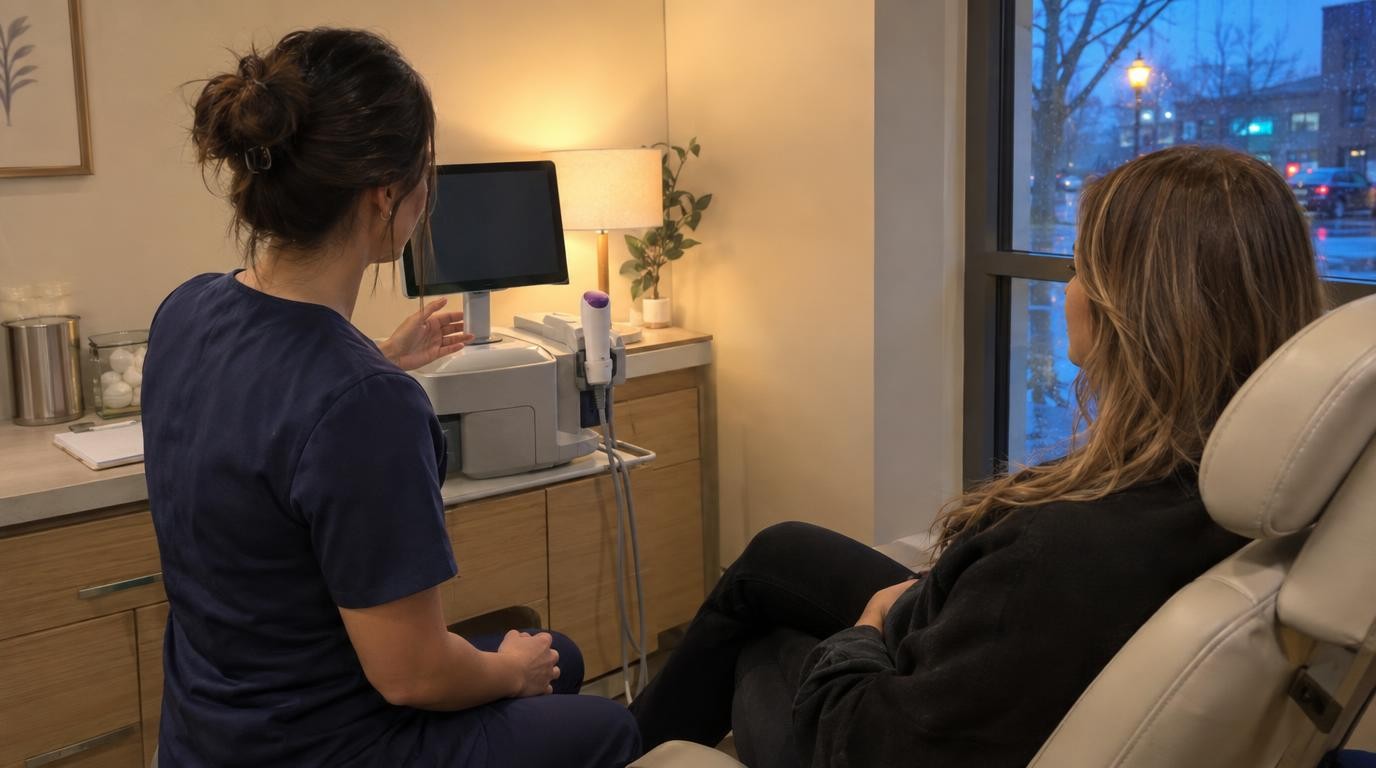
A Thermage visit generally begins with an assessment of the area you want to treat and a discussion of realistic outcomes. The provider prepares the skin, applies the radiofrequency handpiece, and delivers controlled heating with surface cooling. You may notice changing warm and cool sensations; your provider should explain what to expect and respond to your feedback throughout.
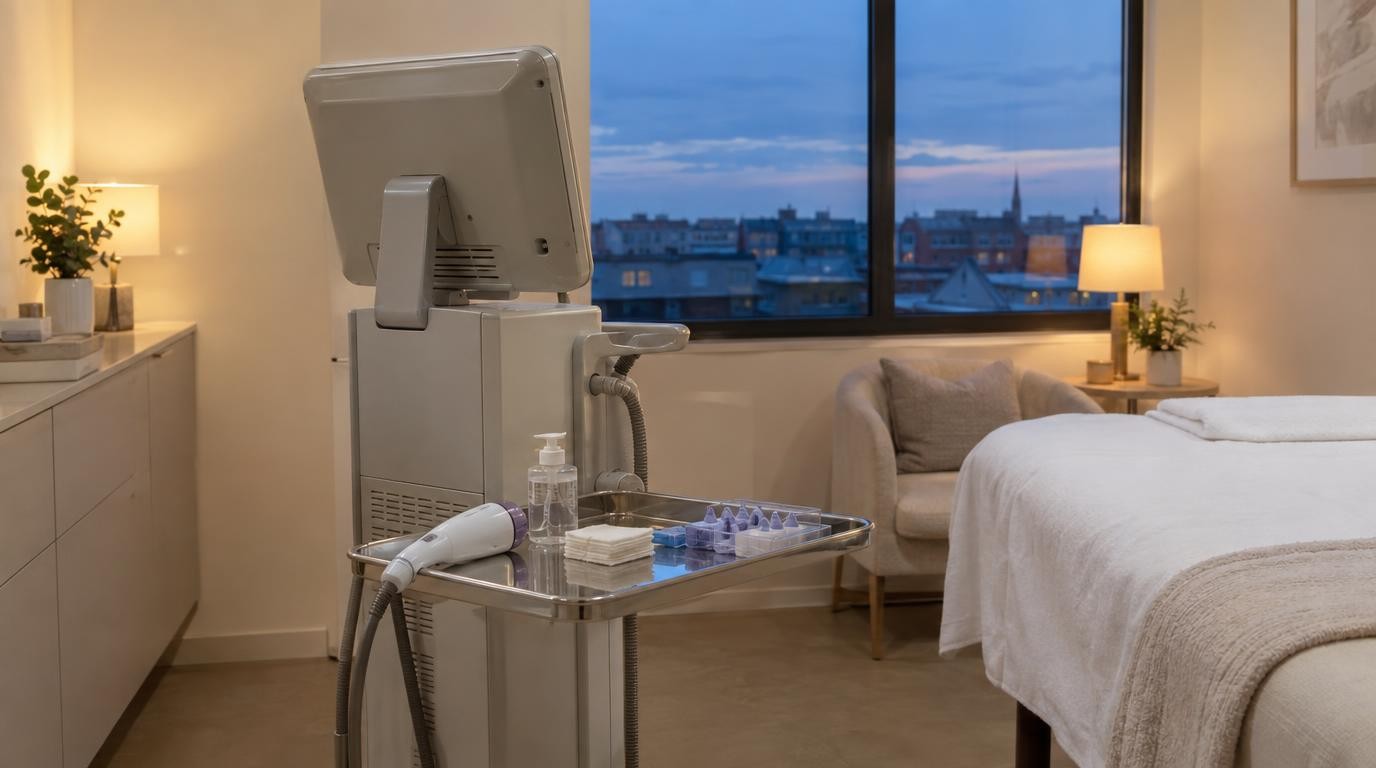
The sequence is straightforward, although the treatment plan should be individualized:
- Assessment: Discuss the area, your goals, medical history, and whether skin tightening is an appropriate approach.
- Preparation: Follow the provider’s instructions for readying the skin and treatment area.
- Treatment: The handpiece delivers radiofrequency energy while cooling helps manage surface heat.
- Aftercare: Review the skin responses to watch for and any instructions specific to you.
Ask which device and treatment settings are planned rather than assuming every radiofrequency procedure follows the same protocol. If you are comparing approaches, our overview of Pelleve skin tightening explains another radiofrequency option.
What Is Recovery Like After Thermage?
Most people can return to ordinary activities promptly after noninvasive radiofrequency skin tightening, although individual aftercare instructions take priority. Temporary redness, warmth, tenderness, or mild swelling can occur. Recovery is usually less involved than recovery from surgery, but prompt return to a routine should not be mistaken for an absence of possible side effects.
Follow your clinician’s guidance on skin care and when to resume products or activities that might irritate the treated area. Ask what changes are expected and whom to contact if a response persists or feels unusual. Burns, blisters, or changes in skin color are less common but possible with heat-based treatment, so discussing risks with your own clinician is an important part of deciding whether to proceed.
Visible tightening may develop gradually as collagen remodels. Because skin quality, treatment area, and goals vary, no single recovery experience or result can be promised. Patience and a clear baseline of what you hope to improve will make follow-up conversations more useful.
How Can You Decide Whether Thermage Fits Your Goals?
Thermage fits best when the goal is a possible, gradual improvement in mild skin looseness rather than removal of excess skin or a dramatic lift. A consultation can clarify whether the jawline, neck, eye area, or another concern is suitable for radiofrequency treatment and what outcome would be realistic for you.
If you are considering Thermage for skin tightening in Portland, Oregon, contact Vip MediSpa for a consultation. Our team can review your goals, medical history, and treatment options with you so your next step reflects the change you actually want to see.
Risks, Side Effects and Who Is Not a Candidate
No medical treatment is free of risk, and what is right for you depends on your own health history. Before going ahead, ask a licensed clinician at Vip MediSpa which side effects are common with this treatment, which complications are possible, and which medical conditions, medicines, allergies or pregnancy plans would make it unsafe for you. If a prescription medicine, device or injectable is involved, ask whether it is approved for this use or used off-label, and ask to see its label and warnings. This article is general information and is not medical advice.
Frequently Asked Questions
Can Thermage get rid of a double chin?
Thermage cannot directly remove the fat that may cause a double chin. If the fullness under your chin is mainly fat, ask your provider which fat-focused approaches might suit you and whether skin tightening could still help with any looseness that remains. Photos showing how the area has changed over time can make that discussion more productive.
What does a Thermage session feel like?
A Thermage session may involve alternating warm and cool sensations as the handpiece delivers radiofrequency energy and cools the skin’s surface. Before your visit, ask how long the session is expected to take for your treatment area and what comfort measures are available. If the heat feels too intense at any point, say so right away so your provider can respond.
What improvement can I expect for loose jowls or neck skin?
Thermage may give loose jowls or neck skin a subtly firmer appearance, particularly when laxity is mild. Because any change may develop gradually, ask whether baseline photos can be taken before treatment so you and your provider can compare the area later. It also helps to ask when a follow-up review is planned. Learn more about Thermage before and after results, including when changes may appear and how to compare photos over time.
When can I return to my usual routine after Thermage?
Most people can resume ordinary activities promptly after Thermage, subject to their clinician’s individual instructions. Before you leave, make sure you know which products or activities to pause, for how long, and whom to call if redness, tenderness, or swelling persists or if you notice blistering or color changes. Having those instructions in writing can make the first few days easier.
Should I tell my provider about a pacemaker or pregnancy before Thermage?
Yes. Tell your provider before scheduling if you have a pacemaker or another implanted electronic device, if you are pregnant or planning a pregnancy, or if you have a skin infection in the area you want treated. For an implanted device, bring its name and model, such as from your device identification card, so your provider can check it against the Thermage treatment guidance. Your provider can then advise whether to proceed, postpone, or consider another approach.






